Sliding barn doors are supposed to feel smooth and effortless. Then you install one, live with it for a week, and realize the “effortless” part can turn into a loud thunk that echoes through the house.
If you’ve got kids who treat it like a racetrack, a pet that bumps it at night, or a hallway that amplifies every sound, a soft-stop damper can be one of the best upgrades you can make.
I’ve set up barn doors that felt classy in photos but sounded like a gym locker in real life. The good news is that you usually don’t need to replace the whole system. In many cases, adding soft stops (also called soft-close or soft-open/soft-close dampers) is enough to prevent slamming, reduce noise, and make the door feel “finished.”
This guide covers how soft-stop dampers work, how to pick the right type, what to watch out for, and what you should realistically expect. I’ll also link to a few Amazon options people commonly use.
What Soft-Stop Dampers Actually Do
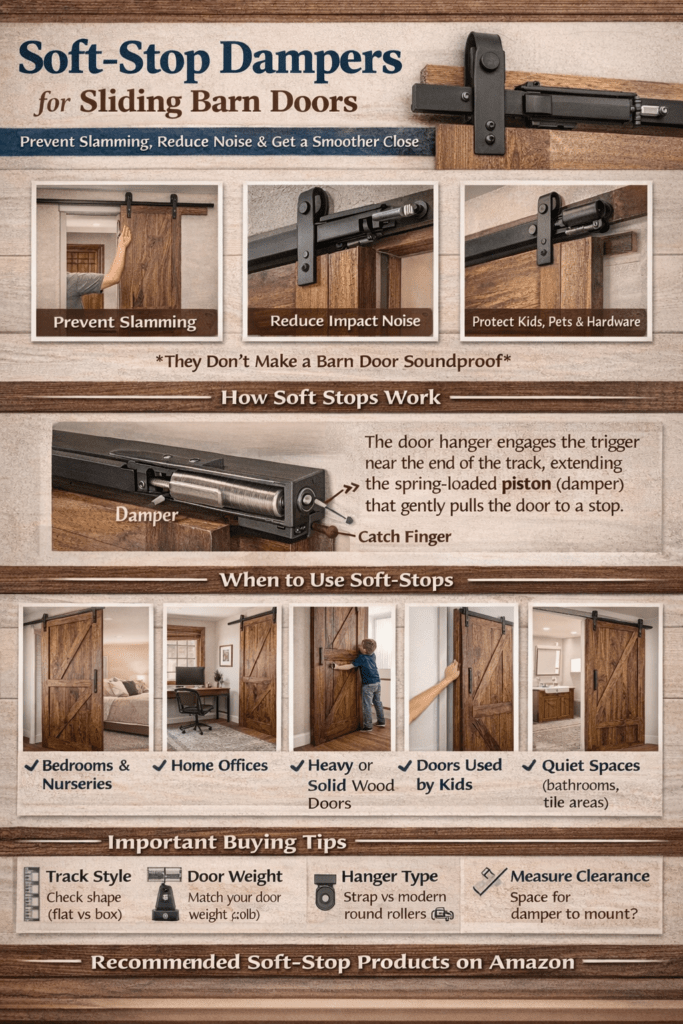
A soft-stop damper is a controlled slowing mechanism that catches the door as it approaches the end of travel, then gently pulls it the rest of the way. Instead of the door hitting the stop at full speed, the damper takes over in the last several inches.
Depending on the model, you can add:
- Soft-Close Only (slows the door as it closes)
- Soft-Open Only (slows it as it opens)
- Both Soft Open & Close (slows both directions)
Soft stops reduce the sharp impact sound, limit bounce-back, and help protect hardware over time. They’re not just about noise. They also reduce the “surprise slam” that can catch fingers or spook pets.
Why Barn Doors Slam in the First Place
Barn doors ride on rollers. Rollers are designed to roll. That sounds obvious, but it explains almost everything.
Common reasons barn doors slam:
- The door is heavy and gains momentum quickly
- The track is very smooth and level (which is good, but fast)
- Kids push it like a toy
- The stop is a hard metal stop (not a cushioned stop)
- Air pressure changes pull it (HVAC, open windows, fans)
Some slamming is simply physics. Soft-stop dampers don’t fight physics. They manage it.
Where Soft Stops Help Most
Soft-stop dampers make the biggest difference in these situations:
- Bedrooms and nurseries where sound matters
- Home offices where you want quieter, calmer movement
- Bathrooms where a slam feels extra loud in tile spaces
- Doors used by kids who don’t have “gentle close” instincts yet
- Heavy wood doors that hit with real force
Door weight matters more than most people expect.
Decision Guidance: Choose the Right Soft-Stop Setup
There are two main paths: add-on dampers or soft-close track systems. Most homeowners are shopping for add-on dampers because they’re cheaper and don’t require replacing the track.
Option A: Add-on Soft-Stop Dampers (Most Common)
These mount to the track or behind it and interact with a trigger on the door hanger/roller assembly. They’re designed to work with specific track shapes and roller styles.
Best for: People who already have a barn door installed and want an upgrade.
Watch for: Compatibility. Not all “universal” kits are truly universal.
Option B: Track Systems With Built-In Soft Close
Some premium tracks integrate soft-close directly.
Best for: New installs or full hardware upgrades.
Watch for: Higher cost and fewer retrofit options.
The Big Compatibility Check (Don’t Skip This)
Soft stops are not one-size-fits-all. Therefore, before buying anything, check:
- Track shape: flat bar vs boxed track vs I-beam style
- Door hanger style: strap hangers vs modern rollers
- Clearance: space behind the track and above the door
- Door weight rating: many dampers have a weight range
- Travel distance: some need a minimum “catch” distance
First, if your door is already finicky—sticking, wobbling, or rubbing—fix that first. Adding a damper to a poorly aligned door can make things worse. Also, if the door is cheap and prone to warping, you may see seasonal changes that affect how the damper catches.
Trade-Offs and Realistic Expectations
Soft stops are worth it, but they aren’t magic. Here’s what I tell people upfront.
What You’ll Love
- The door feels smoother and more expensive
- Slams become gentle closes
- Less bouncing off the stops
- Less rattling and impact noise
What Might Annoy You
- Some dampers require a slightly firmer pull to “engage”
- If people yank the door hard, it can still hit the stop before the damper catches
- Cheap dampers can click, stick, or fail early
- Installation can be fiddly, especially on retrofit tracks
What It Won’t Do
- It won’t soundproof the room
- Dampers won’t fix a door that’s misaligned or wobbling
- Soft Stops won’t stop kids from hanging on the handle
If your goal is overall sound control between rooms, you may also want weatherstripping. Soft stops reduce slam noise, while seals reduce leakage of everyday sound.
Installation Tips That Save Headaches
Even good soft stops can feel “bad” if installed poorly. A few practical tips:
- Measure twice before mounting. Dampers need correct positioning to catch at the right moment.
- Tighten everything. Loose track hardware leads to noise and inconsistent catching.
- Test slowly first. Slide gently and confirm the damper grabs as expected.
- Expect small adjustments. A few millimeters can change performance a lot.
- Use thread locker on key screws if vibration loosens them over time.
If you’re installing on a heavy door, it’s worth having a helper. For example, heavy doors are awkward, and you don’t want to fight gravity while fine-tuning hardware.
3 Soft-Stop / Soft-Close Products on Amazon
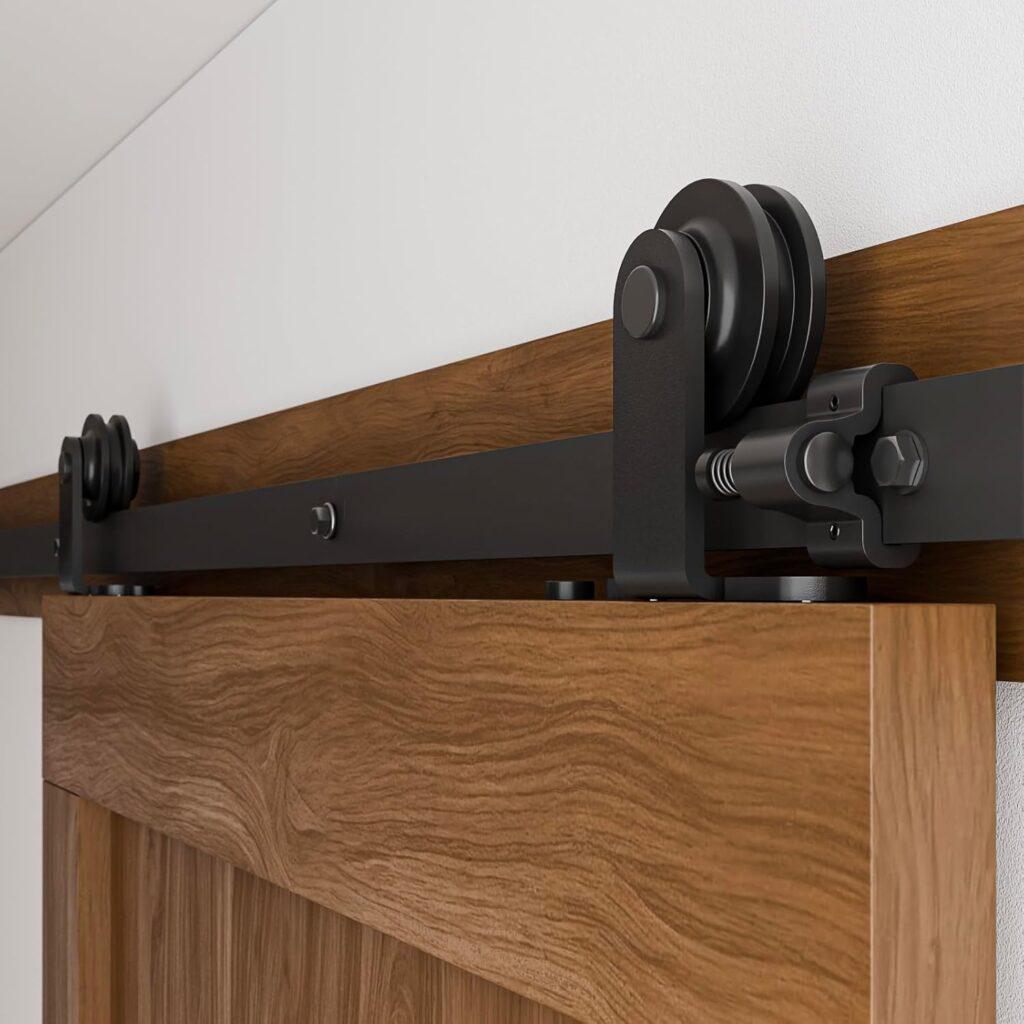
These are common options people buy for barn doors. That said, you still must confirm compatibility with your track and rollers before ordering.
- CCJH Soft Close Mechanism for Sliding Barn Door Hardware
- SMARTSTANDARD Soft Close Mechanism for Barn Door Hardware Kits
- Generic Soft Close Mechanism for Sliding Barn Doors
Frequently Asked Questions
Do I need soft close on both ends?
Not always, soft-close on the “closing” direction is the priority. Plus, soft-open is nice if the door often slams open into a wall or stop.
Will a soft stop work with any barn door kit?
No: compatibility is the #1 issue. Track shape and roller style matter.
Can I add a soft stop to an existing installed door?
Often yes, but some tracks don’t have room behind them. You also need enough clearance for the mechanism.
Does soft close prevent finger pinches?
It reduces sudden slams, which helps. However, it does not eliminate pinch points along the wall gap.
Why does my door still slam sometimes after adding soft close?
Most commonly it’s being pulled too hard, the damper is mounted slightly off, or the door weight is outside the damper’s ideal range.
Conclusion: The Upgrade That Makes Barn Doors Feel “Finished”
If your barn door is loud, slams, or feels a little too “industrial” in daily life, soft-stop dampers are one of the smartest upgrades you can make. They don’t change the look much, but they dramatically change how the door feels and sounds. As long as you choose a compatible mechanism and install it carefully, you’ll get a smoother close, less noise, and less wear on your hardware over time.
Reputable Resources for More Information
- This Old House – Barn door and hardware planning articles
https://www.thisoldhouse.com/doors - Family Handyman – Door hardware and DIY guidance
https://www.familyhandyman.com/ - BHMA (Builders Hardware Manufacturers Association) – General hardware standards and education
https://www.buildershardware.com/