
I’ve seen this story play out many times. Someone buys a barn door that looks great online. The price feels like a win. The install goes smoothly. For a few weeks, everything seems fine.
Then the door starts to twist. It rubs the wall. The gap changes. The rollers feel rough. Eventually, it won’t sit flat anymore. Warping is the number one reason cheap barn doors fail. It’s also one of the easiest problems to avoid if you know what causes it.
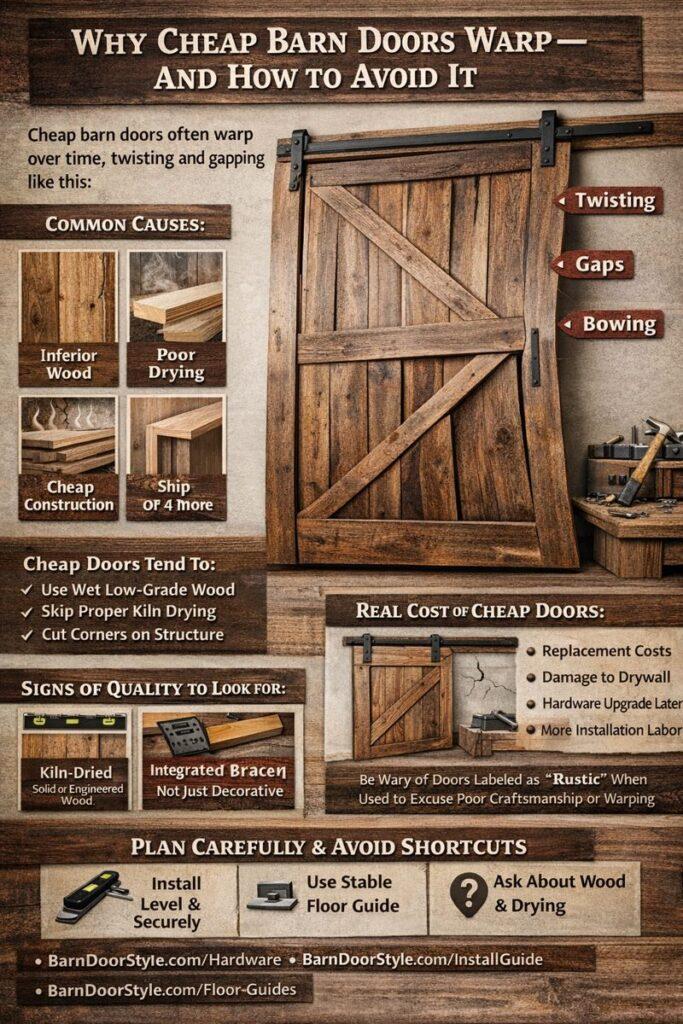
Let’s walk through why budget barn doors warp, what shortcuts create the issue, and how to choose a door that stays straight.
What Does “Warping” Actually Mean?
Warping isn’t just one thing. It can show up as:
- A door bowing outward
- Corners twisting in opposite directions
- Gaps that change seasonally
- The door pulling away from the wall
Once a door warps, it rarely goes back to normal. That’s because the wood itself has changed shape. Hardware adjustments can’t fix that.
The Real Reason Cheap Barn Doors Warp
Warping happens when wood moves unevenly. Cheap barn doors are more likely to warp because manufacturers cut corners in three main areas:
- Wood selection
- Drying process
- Construction method
Each shortcut saves money. Each one increases risk.
Low-Grade Wood Is the Biggest Culprit
Wood quality matters more than most people realize. Lower-priced barn doors often use:
- Fast-grown softwoods
- Wood with high moisture content
- Boards with mixed grain patterns
These boards move at different rates as humidity changes. That movement creates internal stress. Over time, the door twists to relieve it. Better doors use carefully selected boards with consistent grain. That costs more upfront, but prevents problems later.
Poor Drying Causes Long-Term Problems
Wood must be dried properly before assembly. Cheap doors often use wood that is:
- Kiln-dried too quickly
- Air-dried inconsistently
- Assembled before reaching stable moisture levels
When that wood adjusts to your home, it shrinks unevenly. That shrinkage is what causes warping months later, not days. This is why many budget doors look fine at first.
Construction Shortcuts That Lead to Warping
How the door is built matters just as much as the wood itself.
Common shortcuts include:
- Thin backers instead of solid cores
- Decorative battens glued instead of reinforced
- Minimal joinery
- No internal bracing
A door may look thick, but still be structurally weak. If the planks aren’t locked together properly, they will move independently. That movement creates twists and bows.
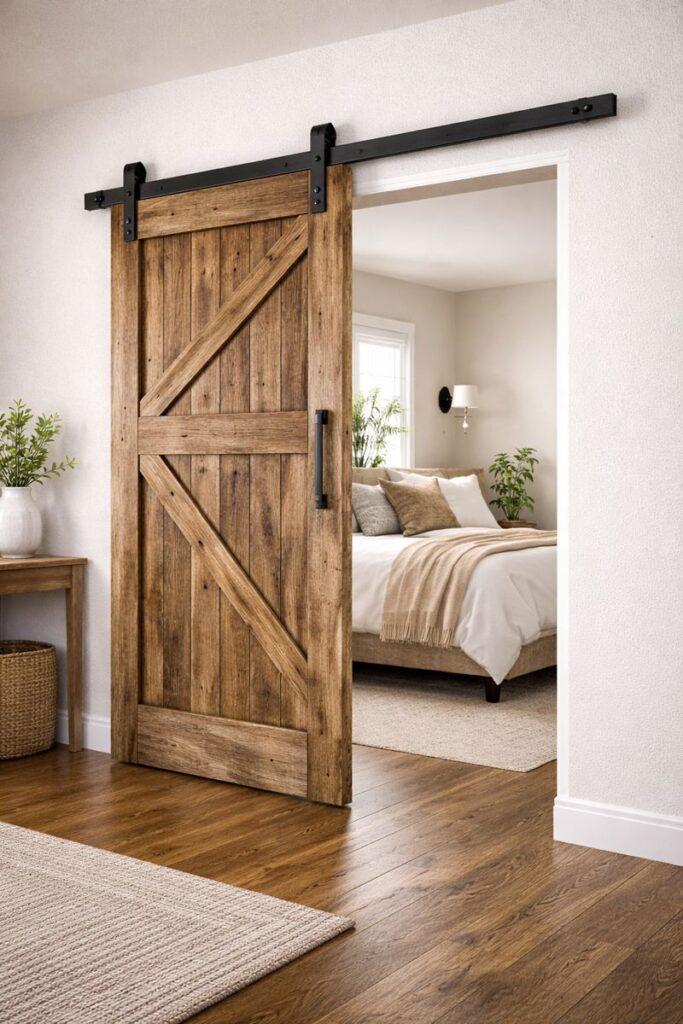
Z-Braces and X-Braces Are Often Decorative
This surprises many homeowners. On cheap doors, braces are often cosmetic. They’re nailed on after assembly. They don’t counteract wood movement – they just hide it for a while.
Well-built doors integrate the brace into the structure. It becomes part of the load path, not decoration.
Climate Makes Cheap Doors Fail Faster
Humidity changes expose weak doors quickly. If you live in a climate with:
- Hot summers
- Cold winters
- Seasonal humidity swings
Cheap doors struggle even more. Bathrooms, basements, and laundry rooms are especially risky. I’ve seen budget doors warp badly in less than a year in these spaces.
Why Hardware Can Make Warping Look Worse
Warping isn’t always caused by hardware, but poor hardware makes it more obvious. Low-quality tracks allow more door movement. That movement exaggerates twisting.
Heavy doors on under-rated hardware also stress the wood unevenly. If you want to understand how hardware affects door performance, this guide helps: https://www.barndoorstyle.com/barn-door-hardware-components/
The Trade-Off: Price vs Stability
Here’s the honest trade-off: cheap barn doors save money upfront. However, they cost more later. Warped doors lead to:
- Replacement costs
- Reinstallation labor
- Wall repairs
- Hardware upgrades
Mid-range doors often last longer than ultra-cheap ones. They usually use better materials and construction. The goal isn’t buying the most expensive door. It’s avoiding the cheapest shortcuts.
How to Avoid Buying a Door That Warps
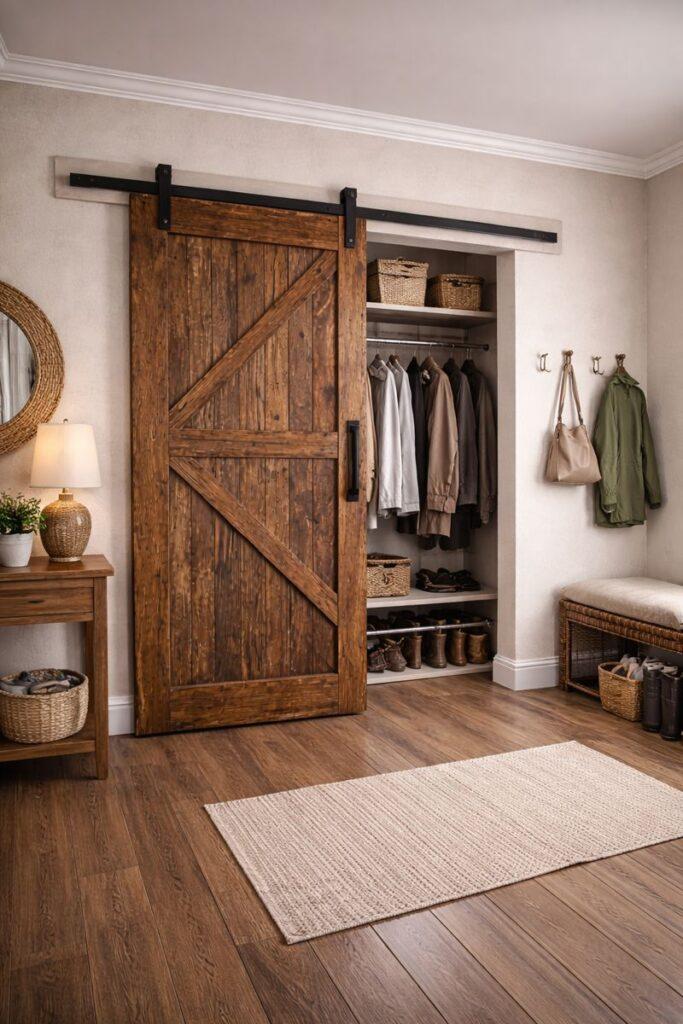
You don’t need to be a wood expert. You just need to ask the right questions.
Look for These Features
- Kiln-dried wood with stable moisture levels
- Solid core or engineered core construction
- Integrated bracing, not decorative only
- Clear weight and material specifications
Be Careful With “Rustic” Claims
Rustic doesn’t mean poorly built. Some sellers use “rustic” to excuse defects. Warping is not character. It’s failure.
Installation Matters More Than People Think
Even a good door can warp if installed poorly. Uneven mounting causes stress across the door surface.
Make sure:
- The track is perfectly level
- Anchors hit solid structure
- Floor guides prevent swing
If you’re installing yourself, this tutorial helps avoid mistakes: https://www.barndoorstyle.com/barn-door-installation/
Floor Guides Help Reduce Long-Term Stress
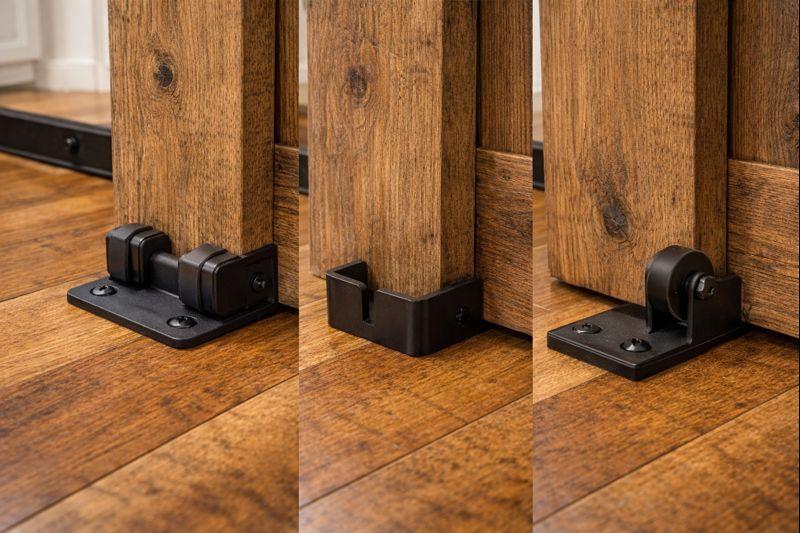
Floor guides don’t prevent warping, but they reduce secondary movement. For example, less swing means less torque on the door, and this matters more with wider doors.
If you’re comparing options, this guide breaks them down: https://www.barndoorstyle.com/barn-door-floor-guide/
Realistic Expectations for Any Wood Door
No wood door is perfectly static. In fact, seasonal movement is normal. However, what’s not normal is:
- Visible twisting
- Gaps that grow over time
- Hardware strain
- Doors rubbing walls
A well-built door moves slightly and evenly. A cheap door moves unpredictably.
Frequently Asked Questions
Can a warped barn door be fixed?
Minor warping may be reduced. Severe warping usually cannot be corrected.
Do solid wood doors warp more than engineered doors?
Solid wood can warp more if poorly built. Engineered cores often stay more stable.
Is reclaimed wood more likely to warp?
Only if improperly dried. Well-prepared reclaimed wood can be very stable.
Does sealing the door prevent warping?
Proper sealing helps, but it cannot fix poor construction.
Are cheaper doors okay for closets?
Sometimes. Low-humidity, low-use spaces reduce risk.
Final Thoughts: Cheap Doors Teach Expensive Lessons
Warping doesn’t happen because wood is bad, it happens because shortcuts were taken.
When you understand how barn doors are built, pricing makes more sense. You start seeing where costs were saved. Spend money on structure, not just looks: straight door will always feel like a better deal.