
Sliding barn doors add style and flexibility to a home, but they also introduce a few safety considerations when children or pets are part of daily life. I’ve seen plenty of homes where barn doors work beautifully with families, and others where they quickly become a frustration. The difference usually comes down to planning and hardware choices, especially when it comes to safety locks.
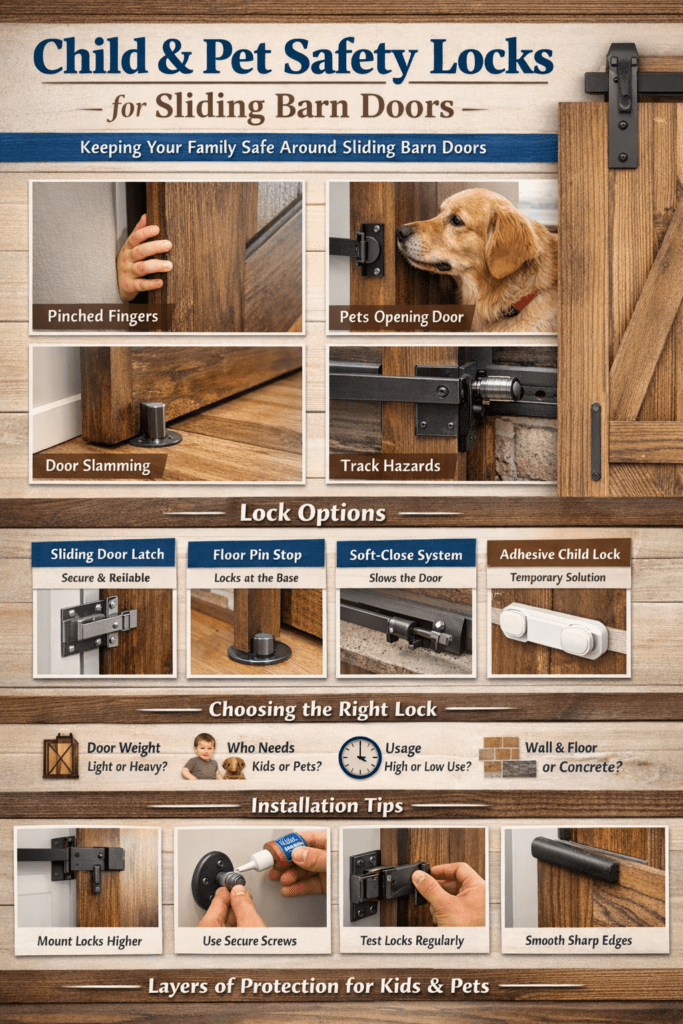
How to Make Barn Doors Safer in Homes With Kids or Pets
Barn doors are designed to move easily. That smooth glide is what makes them appealing, but it is also what allows curious kids or determined pets to move them without much effort. Unlike hinged doors, barn doors typically don’t latch on their own, and they don’t naturally stop in place unless something is installed to control them.
If your barn door covers a bathroom, pantry, laundry room, or office, a safety lock isn’t an afterthought. It’s a practical upgrade that helps prevent injuries, limits unwanted access, and adds peace of mind.
Why Barn Doors Can Be Risky Without Added Safety
Barn doors are not inherently dangerous, but they behave differently than standard doors. Because they slide along a track, they create pinch points along the door edge and the wall. Small fingers can easily wander into that space during play. Pets often learn quickly that a sliding door only needs a gentle push to open.
Another common issue is momentum. A barn door can pick up speed when pushed, especially heavier wood doors. If a child pulls too hard or lets go suddenly, the door can slide quickly and slam into the stop. Over time, this also stresses the hardware and track.
These risks don’t mean barn doors should be avoided. They simply mean that safety should be part of the design from the beginning.
Types of Child and Pet Safety Locks That Work Well
Not every safety solution works equally well on a barn door. Some options are better suited for pets, others for young children, and some work best when combined with other hardware upgrades.
Sliding Door Latches
Sliding door latches are one of the most reliable ways to control a barn door. These are typically mounted near the top or side of the door and prevent it from sliding when engaged. When installed properly, they keep the door firmly in place and are difficult for small children or pets to defeat.
These latches work especially well for doors that need to remain closed most of the time, such as pantries or home offices. They are visible, which some homeowners dislike, but they are dependable and straightforward. If you are already choosing quality track and rollers, pairing them with a latch makes sense. We cover hardware basics and compatibility here.
Floor-Mounted Door Stops With Locking Pins
Floor-mounted stops that accept a locking pin from the door offer a more robust solution for heavier doors. When engaged, they physically prevent the door from sliding in either direction. This makes them very effective in homes with strong pets or active kids.
These stops require drilling into the floor, which may not work for renters or certain flooring types. They are also visible at floor level, which is a trade-off some homeowners are willing to make for added security. Door weight plays an important role here, especially with solid wood doors. If you’re unsure how heavy your door really is, this guide is helpful.
Soft-Close Track Systems
Soft-close systems are often misunderstood as safety locks. They aren’t locks, but they do improve safety by slowing the door as it approaches the open or closed position. This reduces the chance of slammed fingers and sudden impacts.
Soft-close hardware works best as part of a layered safety approach. It makes the door gentler to use, especially for children, but it won’t stop a pet from pushing the door open. It’s best viewed as a comfort and safety upgrade rather than a replacement for a lock.
Adhesive Childproof Sliding Locks
Adhesive safety locks are commonly used for baby-proofing and can work on lightweight barn doors for short-term needs. They attach to the door and wall without drilling, which makes them appealing for renters.
The downside is durability. Adhesive locks tend to loosen over time, especially on textured surfaces or in warm environments. They may stop a toddler, but most pets will eventually overpower them. These are best treated as temporary solutions rather than long-term fixes.
How to Choose the Right Safety Lock
Choosing the right lock starts with understanding how the door is used. Door weight matters, because heavier doors need stronger mechanical solutions. Who you are protecting also matters. Toddlers are more at risk from pinch points, while pets are more likely to push doors open repeatedly.
Frequency of use is another factor. A door that opens dozens of times per day needs a lock that is convenient and durable. A door that stays closed most of the time can use a more secure, less frequently adjusted option.
Finally, consider the wall and floor surfaces around the door. Concrete, tile, and older drywall can limit certain installation methods. If the door already sticks or warps, that problem should be addressed first. Warped doors don’t slide predictably and can defeat even good safety hardware. More on that issue can be found here.
Setting Realistic Expectations About Safety
Safety locks reduce risk, but they don’t eliminate it entirely. Children grow, pets learn, and hardware loosens over time. A lock that works perfectly today still needs occasional inspection.
Think of barn door safety the same way you think about stair gates or cabinet locks. They are tools that support good supervision and smart home design. They work best when combined with regular checks, tightened screws, and clear household rules.
Installation Tips That Improve Safety
Proper installation matters as much as the lock itself. Whenever possible, mount locks above a child’s reach. Use thread-locking compound on screws to prevent loosening. Test the lock regularly during the first few weeks to make sure it remains secure.
Pay attention to sharp edges and exposed hardware. Small adjustments during installation can make a big difference in long-term safety and comfort.
Frequently Asked Questions
Are sliding barn doors safe for homes with toddlers?
They can be when equipped with appropriate locks and soft-close hardware. Unlocked barn doors present pinch risks.
Can pets open locked barn doors?
Most mechanical latches and pinned stops prevent pets from opening doors. Adhesive locks are less reliable.
Do soft-close systems replace safety locks?
No. They reduce slamming but do not prevent doors from opening.
Will installing a lock damage the door or wall?
Drilled locks leave holes, while adhesive locks can damage paint when removed.
Are barn doors safer than hinged doors?
Neither is automatically safer. Safety depends on hardware, placement, and supervision.
Conclusion: Smart Setup Makes Barn Doors Family-Friendly
Barn doors can absolutely work in homes with children and pets when they are installed thoughtfully. A well-chosen safety lock reduces risk, improves daily use, and protects both people and hardware.
When safety is treated as part of the design rather than an afterthought, barn doors remain both functional and attractive. A few smart decisions upfront can prevent long-term frustration and help your barn door fit seamlessly into family life.
Reputable Resources for More Information
- U.S. Consumer Product Safety Commission – Home Safety
- American Academy of Pediatrics – Childproofing Guidelines
- Humane Society of the United States – Pet-Safe Home Design