
Wood barn doors look simple once they’re installed. One slab of wood. A track. A clean slide.
What most people don’t see is the weight hanging on that wall.
I’ve helped many homeowners choose and install wood barn doors. Weight is the question that comes up most often. It’s also the one that causes the biggest regrets when ignored.
If you’re wondering how heavy a wood barn door really is, and whether your wall can handle it, you’re asking the right question at the right time.
Let’s break it down clearly and realistically.
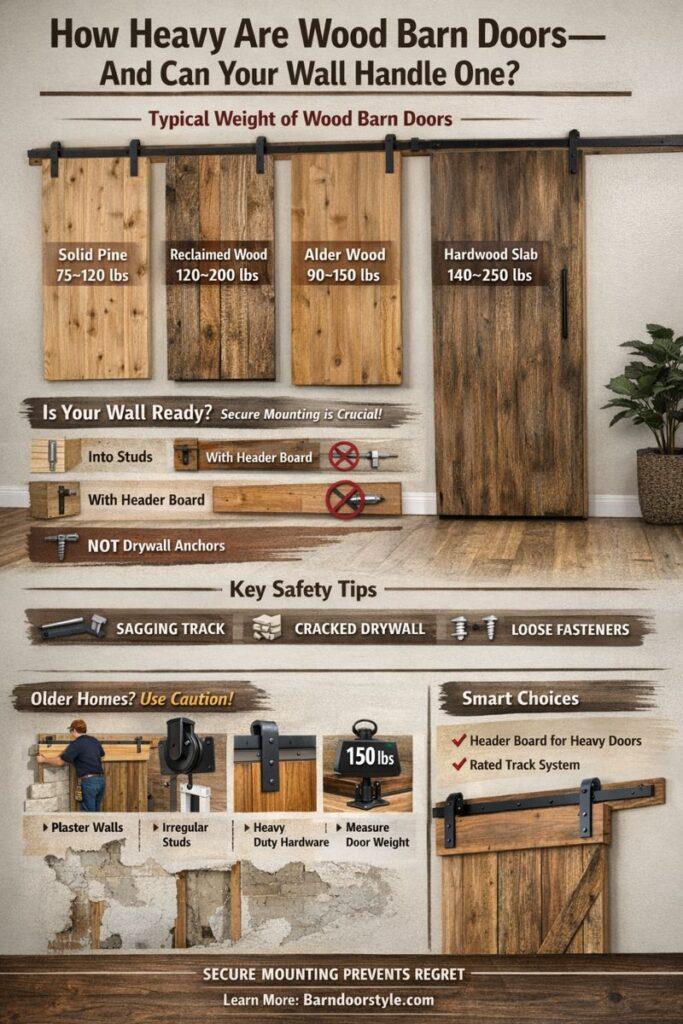
How Heavy Are Wood Barn Doors, Really?
Wood barn doors are heavier than most people expect. Even small ones carry real load.
Here’s what I typically see:
- Solid pine doors: 75–120 pounds
- Solid alder doors: 90–150 pounds
- Reclaimed wood doors: 120–200+ pounds
- Hardwood slab doors: 140–250 pounds
Door thickness plays a major role. So does construction style. A hollow-core door might look similar, but weighs far less. Most wood barn doors are solid or semi-solid. That weight has to go somewhere. And it all ends up on your wall.
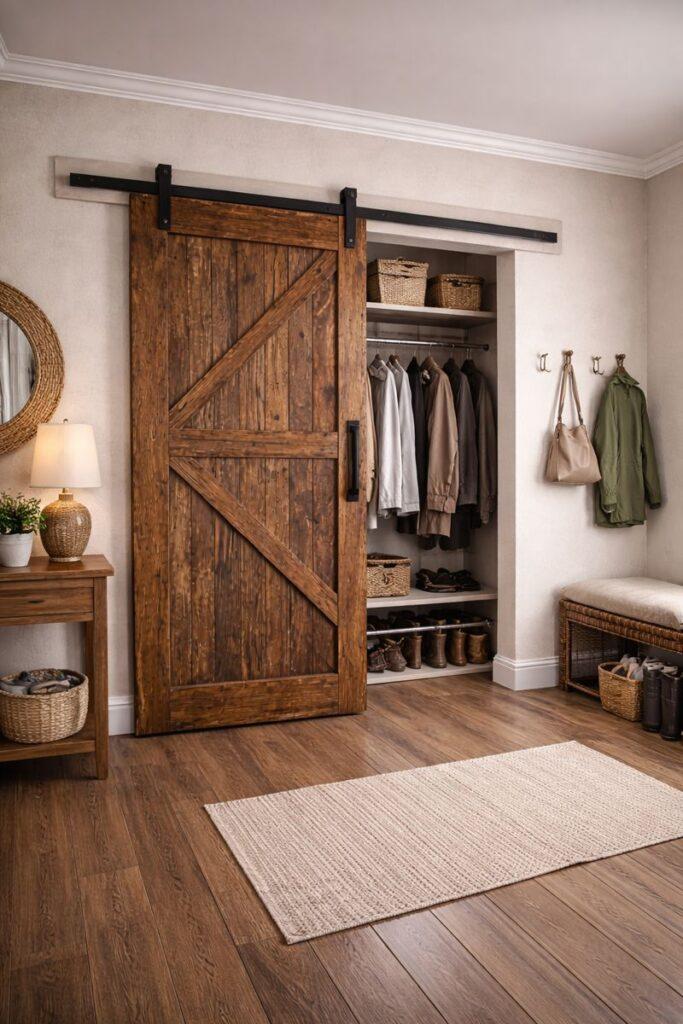
Why Barn Door Weight Matters More Than You Think
Barn doors don’t sit in a frame like hinged doors. They hang entirely from the track.
That means:
- All weight pulls downward
- The track creates leverage
- The wall takes constant stress
This is different from a traditional door. Hinged doors distribute weight vertically into the floor and jambs. Barn doors don’t.
If the wall isn’t prepared, problems appear slowly. Screws loosen, tracks sag, doors rub and drywall cracks. None of this happens on day one. That’s why people underestimate the risk.
Can a Standard Wall Support a Wood Barn Door?
Sometimes yes. Sometimes no.
A standard interior wall usually has:
- 2×4 studs
- 16-inch spacing
- Drywall only between studs
If your track is anchored directly into studs, many walls can support doors under 120 pounds. Once doors get heavier, things change.
Heavy doors need either:
- A solid header board
- Or continuous structural blocking
- Or a steel track system rated for higher loads
Drywall anchors alone are never enough. Not even heavy-duty ones.
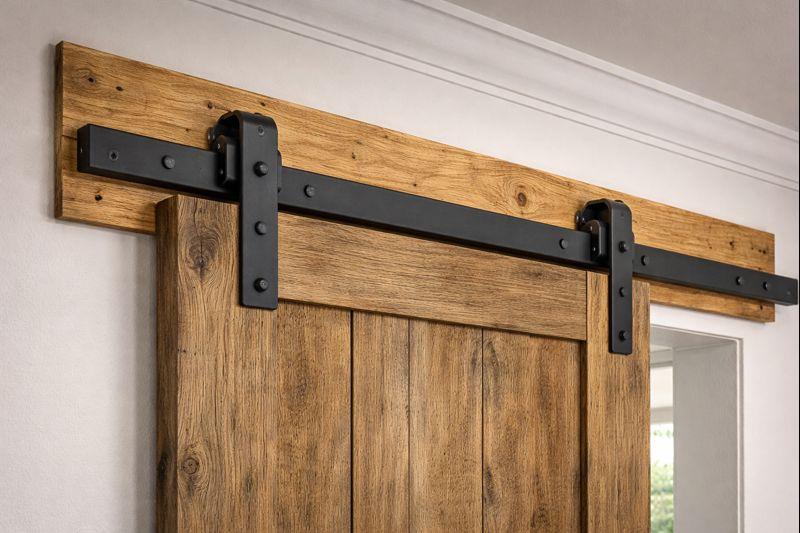
Studs Alone vs Header Boards
This is where most installs go wrong. People assume hitting studs is enough. Sometimes it is – but often it’s not.
Stud-Only Mounting
Pros
- Clean look
- No visible header
- Works for lighter doors
Cons
- Limited anchor points
- Load isn’t evenly distributed
- Not ideal for heavy doors
Header Board Mounting
Pros
- Distributes weight evenly
- Allows flexible track placement
- Much safer for heavy doors
Cons
- Visible wood piece
- Requires proper leveling
- Adds installation steps
For reclaimed or thick wood doors, I strongly prefer header boards. They reduce long-term stress on the wall. If you want details on proper hardware and mounting, this door hardware guide is helpful.
Door Width, Thickness, and Weight Trade-Offs
Bigger doors look great. They also weigh more.
Here’s the trade-off I explain to homeowners:
- Wider doors feel dramatic
- Thicker doors feel solid
- Heavier doors need stronger walls
A 42-inch wide door often weighs 30–40 pounds more than a 36-inch version. That extra weight multiplies stress on the track.
If your wall is borderline, downsizing slightly can save money and complexity.
There’s no shame in choosing smart over oversized.
Realistic Expectations for Older Homes
Older homes deserve extra caution.
Plaster walls, uneven studs, and hidden surprises are common. I’ve opened walls that had:
- Studs spaced irregularly
- Old nail holes weakening wood
- No blocking where expected
In these homes, surface mounting with a header board is often the safest route. Trying to force a hidden install can cause damage later.
Floor Guides Matter More With Heavy Doors
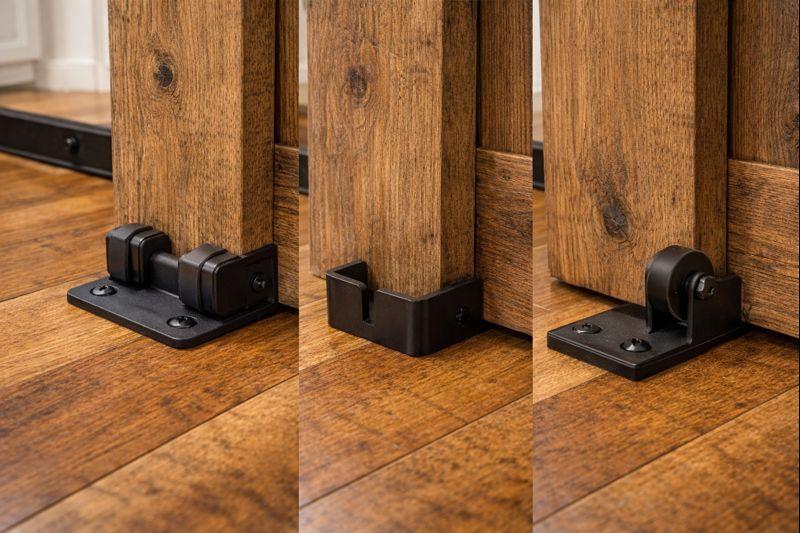
Heavier doors swing more. That movement stresses the track. A proper floor guide keeps the door stable and reduces torque on the wall.
Light doors can get away with minimal guides. Heavy doors cannot. If you’re still choosing one, the floor guide page helps compare options.
When You Should Reinforce the Wall
I recommend wall reinforcement when:
- The door weighs over 120 pounds
- The wall has limited stud access
- The door is wider than 40 inches
- The home has plaster or old framing
Reinforcement can mean:
- Adding blocking inside the wall
- Using a full-length header
- Upgrading to commercial-grade hardware
If you’re planning installation yourself, review this door install walkthrough first.
Frequently Asked Questions
Can drywall anchors support a barn door?
No. Drywall anchors are not designed for dynamic loads. They will fail over time.
How do I estimate door weight before buying?
Check wood species, thickness, and construction. Vendors should list weight ranges.
Is heavier always better for quality?
Not necessarily. Well-built lighter doors can perform just as well with less stress.
Can metal tracks handle heavy wood doors?
Only if rated for the load. Hardware matters as much as the wall.
Should I hire a professional for heavy doors?
If the door exceeds 150 pounds, professional installation reduces risk.
Final Thoughts: Smart Weight Choices Prevent Regret
Wood barn doors bring warmth and character. They also bring weight. Most problems I see come from underestimating that weight. Not from bad doors. Not from bad walls. From bad assumptions.
Measure carefully. Choose the right mounting method. Don’t force a light wall to hold a heavy door. If you respect the load, the door will last for years without issues.