
Sliding barn doors are simple by design, which is part of their appeal. Still, one of the most common questions I hear is whether a barn door can jump off the track. That concern is even stronger in homes with kids or pets running around.
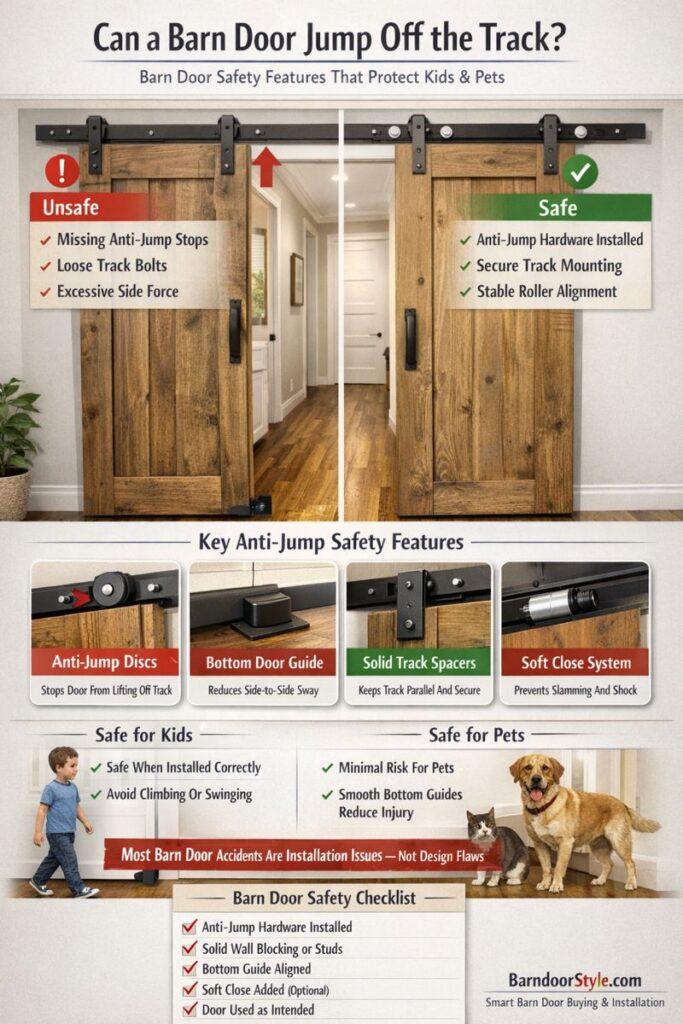
I’ve installed, adjusted, and fixed enough barn doors to say this clearly: a properly designed and installed barn door should not jump off the track. But not all hardware is created equal, and not every installation is done correctly.
This article walks through what actually causes derailments, which anti-jump features matter, and what’s realistic when it comes to safety.
Can a Barn Door Really Jump Off the Track?
Yes, it can—but it’s uncommon when the system is set up correctly.
Barn doors ride on steel wheels that sit over a track lip. Gravity keeps the door seated. For a door to jump off, something unusual has to happen. Common causes include:
- No anti-jump hardware installed
- Loose track bolts or lag screws
- Excessive side force applied to the door
- Improper spacing between rollers and track
- Poor quality wheels or track steel
Most derailments I’ve seen involved DIY installs that skipped small parts or rushed alignment.
If you’re worried about wall strength or mounting issues, this guide on wall support and blocking explains how load transfer works.
What Anti-Jump Features Should You Look For?
Anti-jump features are simple components that prevent the door from lifting upward off the track. They’re small, but critical.
1. Anti-Jump Discs or Plates
These are metal tabs installed above the door, just under the track.
If the door tries to lift, the disc hits the track and stops upward motion. Good systems include adjustable anti-jump plates so they can be dialed in tight. This is the single most important safety feature.
2. Bottom Door Guides
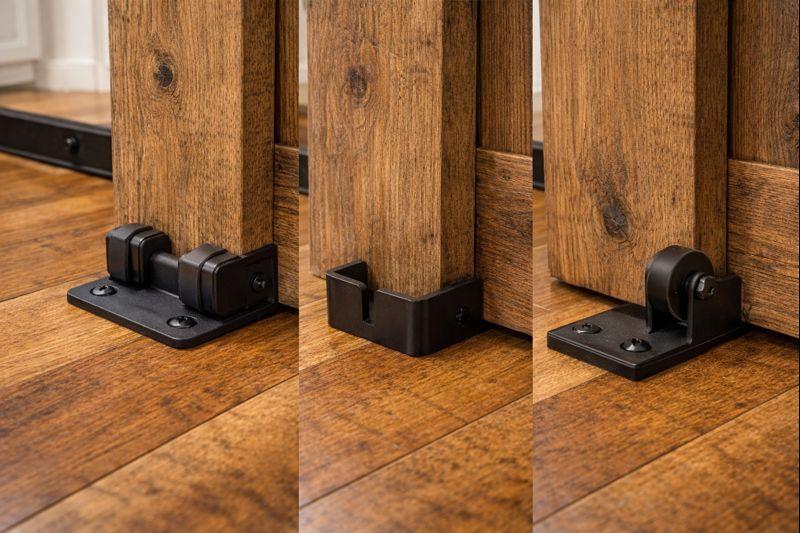
Bottom guides don’t stop upward movement, but they reduce side-to-side sway.
Less sway means less leverage on the rollers. Floor-mounted or wall-mounted guides both work if aligned correctly.
If your door wobbles, the guide is usually the issue. This overview of barn door hardware components helps clarify what each part does.
3. Track Spacers and Stand-Offs
Quality kits use solid steel spacers to keep the track parallel to the wall.
If spacers bend or compress, the track can tilt forward. That increases the chance of roller lift under force. Avoid kits with thin washers instead of solid stand-offs.
4. Soft Close Systems
Soft close mechanisms don’t stop derailment directly. They reduce slamming, which reduces shock forces. Less force means less wear over time. That’s especially helpful in busy homes.
Is a Barn Door Safe for Kids?
Barn doors can be safe for kids, but they’re not childproof by default. Here’s what I tell families realistically:
What Barn Doors Do Well
- No finger-pinch hinge side like swing doors
- Smooth rolling motion when aligned correctly
- No sudden closing if soft close is installed
Where Risks Still Exist
- Kids pulling or hanging on the door
- Fingers near the bottom guide
- Doors slammed repeatedly at full speed
If a child can climb or swing on the door, you need robust anti-jump hardware and a sturdy bottom guide. Barn doors work best in low-impact spaces like bedrooms or offices, not playrooms. For tight layouts, this article on clearance and wall space is worth reading.
Is It Safe for Pets?
Pets are usually less of a concern than kids. Dogs and cats don’t generate upward force. The main risks involve tails or paws near the bottom guide.
To reduce issues:
- Choose a smooth floor guide without sharp edges
- Keep guide spacing tight to prevent wobble
- Avoid doors with large bottom gaps
Large dogs leaning against doors can stress poor installations. That’s another reason wall anchoring matters.
Realistic Expectations About Safety
This is where expectations need to be honest. Barn doors are not designed to be climbed, swung on, or used as gym equipment. Anti-jump features prevent accidents, not misuse.
Think of barn doors like stair railings. Safe when built correctly, unsafe when abused.
If you want maximum containment or lockability, a barn door may not be the right choice. This comparison of barn doors versus pocket doors explains those trade-offs clearly.
Trade-Offs and Risks to Consider
Every design choice involves compromise.
Pros
- Simple mechanics
- Fewer failure points than hinged doors
- Easy inspection and maintenance
Cons
- Exposed hardware requires proper setup
- Not ideal for high-impact environments
- Depends heavily on install quality
Skipping anti-jump hardware is the biggest mistake I see. It’s also the easiest to avoid.
Frequently Asked Questions
Do all barn door kits include anti-jump hardware?
No. Some budget kits exclude it or offer it as an add-on.
Can I add anti-jump plates later?
Yes. Most tracks allow retrofit anti-jump discs.
How much force would it take to derail a door?
More than normal use. It usually involves pulling upward or repeated abuse.
Are heavier doors safer?
Heavier doors sit more firmly on the track but need stronger mounting.
Do soft close systems improve safety?
They reduce slamming and wear but don’t replace anti-jump hardware.
Conclusion: Are Barn Doors Safe When Done Right?
A barn door should not jump off the track when installed correctly. Anti-jump hardware, solid mounting, and proper guides make the system stable and predictable.
For homes with kids or pets, the details matter more. Choose quality hardware, install every component, and set realistic expectations for use.
When treated like a door instead of a toy, a barn door is a safe and durable option that holds up well over time.