Barn doors look simple once they are installed, but the hardware behind them does the real work. I’ve seen plenty of installs go sideways because someone bought a beautiful door without understanding what the hardware actually does. Taking a few minutes to understand each component saves money, frustration, and drywall repairs later.
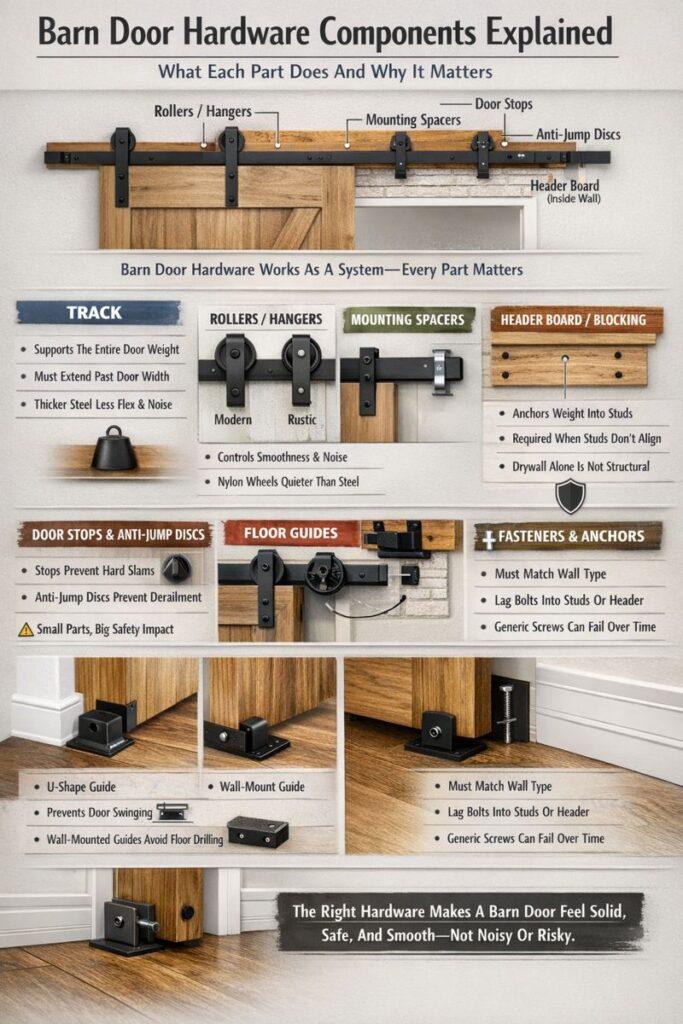
This overview breaks down the main barn door hardware components, what each part does, and how they work together. I’ll also share decision tips, realistic expectations, and common trade-offs you should think through before buying anything.
Why Understanding Hardware Matters More Than the Door
Most people shop for the door first. That’s natural. The hardware often determines whether the door slides smoothly, stays quiet, and remains safe over time.
Barn door hardware supports the full weight of the door. It controls alignment, clearance, and stability. Choosing the wrong setup can lead to dragging doors, wall damage, or noisy operation. If you are still deciding between styles, this overview pairs well with the buying advice in this guide.
Barn Door Hardware Selector
Answer a few questions and get a practical hardware recommendation that matches your door, wall, and space.
1) Door Specs
2) Wall & Install
3) Style & Budget
Track: The Backbone of the System
The track is the long metal rail mounted above the doorway. Everything depends on it.
Tracks are typically steel and come in straight or decorative styles. The length must exceed the door width, usually by at least two inches per side. Short tracks are a common mistake.
Decision Guidance
- Heavier doors need thicker steel tracks.
- Wider doors need longer tracks for full clearance.
- Decorative tracks cost more but rarely improve performance.
Trade-Offs And Risks
Thinner tracks look sleek but flex under heavy doors. Flexing increases roller wear and noise.
Rollers Or Hangers: How The Door Moves
Rollers attach to the top of the door and ride along the track. Their design affects noise, smoothness, and weight capacity. Flat-track rollers are popular for modern looks. Spoked rollers fit rustic styles. Nylon wheels are quieter than steel.
Realistic Expectations: No barn door is silent. Quality rollers reduce noise but won’t eliminate it.
Mounting Spacers: Protecting Your Wall
Spacers hold the track away from the wall. This clearance allows trim, door casing, and uneven walls to be avoided.
Spacer length matters more than most people expect. Too short and the door rubs. Too long and the door feels unstable.
Common Mistake
Assuming all trim depths are the same. Measure your wall carefully before ordering.
Header Board Or Blocking: The Hidden Support
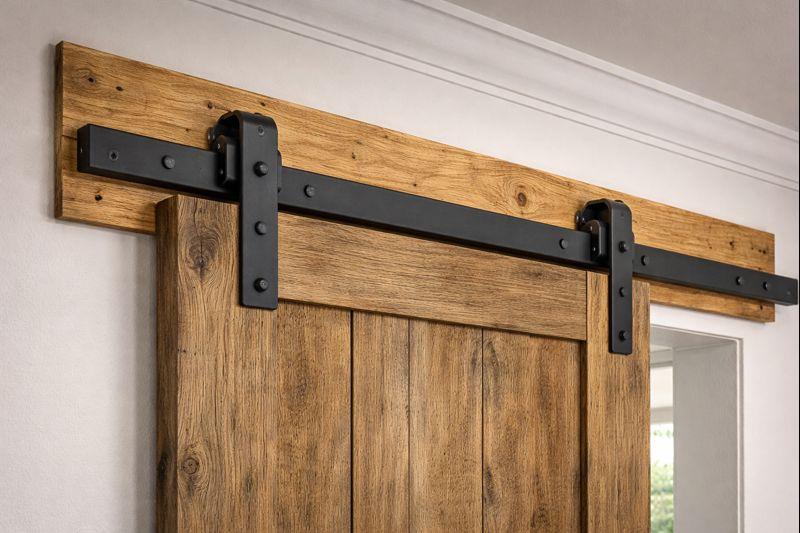
Barn door hardware must anchor into solid structure. That means wall studs or a header board.
A header board is a wood beam mounted across studs. The track mounts to the board, not just drywall.
Decision Guidance
- Use a header when studs do not align with track holes.
- Painted headers can blend into the wall easily.
- Skipping blocking risks wall failure.
This install walkthrough explains support options clearly.
Door Stops: Preventing Costly Slams
Door stops limit how far the door slides. They prevent rollers from crashing into the track ends.
Some stops mount on the track. Others hide inside it.
Trade-Off
Hidden stops look cleaner but can be harder to adjust later.
Anti-Jump Discs: Small Part, Big Safety Role
Anti-jump discs keep the door from lifting off the track. They are required for safety.
This part is easy to overlook. It should never be skipped.
Realistic Expectation
Anti-jump hardware does not prevent all movement. It prevents derailment, not wobble.
Floor Guides: Keeping The Door Aligned
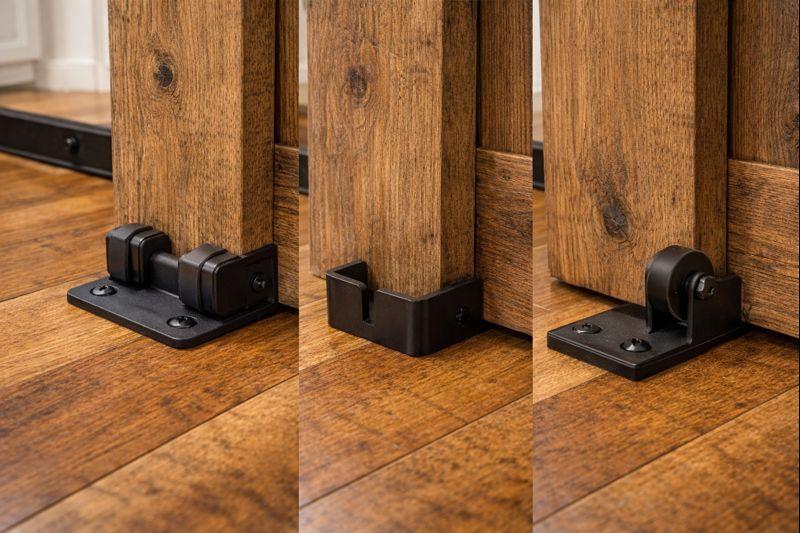
Floor guides stop the door from swinging away from the wall. They mount to the floor or wall base.
U-shaped guides wrap around the door bottom. Wall-mounted guides avoid drilling floors.
Decision Guidance
- Tile or concrete floors often favor wall-mounted guides.
- Thicker doors need adjustable guides.
This comparison helps choose the right option: Barn Door Floor Guides
Fasteners And Anchors: Not All Screws Are Equal
Hardware kits include lag bolts and anchors. These must match the wall type.
Drywall anchors alone are not enough. Studs or blocking are required.
Risk To Avoid
Using generic screws instead of rated hardware can lead to failure months later.
Putting It All Together
Every component works as a system. A strong track with weak anchors still fails. Quiet rollers on a flexing wall still make noise.
Understanding how each part interacts helps you buy smarter and install once.
Frequently Asked Questions
Do barn door hardware kits include everything needed?
Most kits include track, rollers, stops, and fasteners. Headers and floor guides may be separate.
Can I mix hardware brands?
Sometimes, but tolerances vary. Mixing parts can cause alignment problems.
How much weight can barn door hardware hold?
Most quality kits support 200–400 pounds. Always check ratings.
Is more expensive hardware always better?
Not always. Price often reflects style, not strength. Steel thickness matters more.
Do I need special tools to install hardware?
Basic tools work, but a stud finder and level are essential.
Realistic Expectations Before You Buy
Barn door hardware is visible and functional. You may hear rolling sounds. You may see small gaps. That’s normal.
What you should expect is smooth movement, secure mounting, and long-term reliability when components are chosen correctly.
Conclusion
Barn door hardware looks simple, but every piece has a job. Understanding tracks, rollers, supports, and guides helps you avoid costly mistakes.
Take time to measure, match weight ratings, and plan wall support. The right hardware makes the door feel solid, safe, and satisfying to use.