
Choosing between a barn door and a pocket door seems straightforward at first. Both save space. Both look clean. Both avoid the swing radius of a traditional door.
In real homes, however, they behave very differently once installed. I have seen homeowners thrilled with their choice—and others frustrated within weeks. The difference usually comes down to expectations.
This guide walks through what actually matters when choosing between barn doors and pocket doors. It focuses on real-world use, installation realities, and long-term trade-offs instead of showroom appeal.
What Barn Doors Do Best in Real Homes

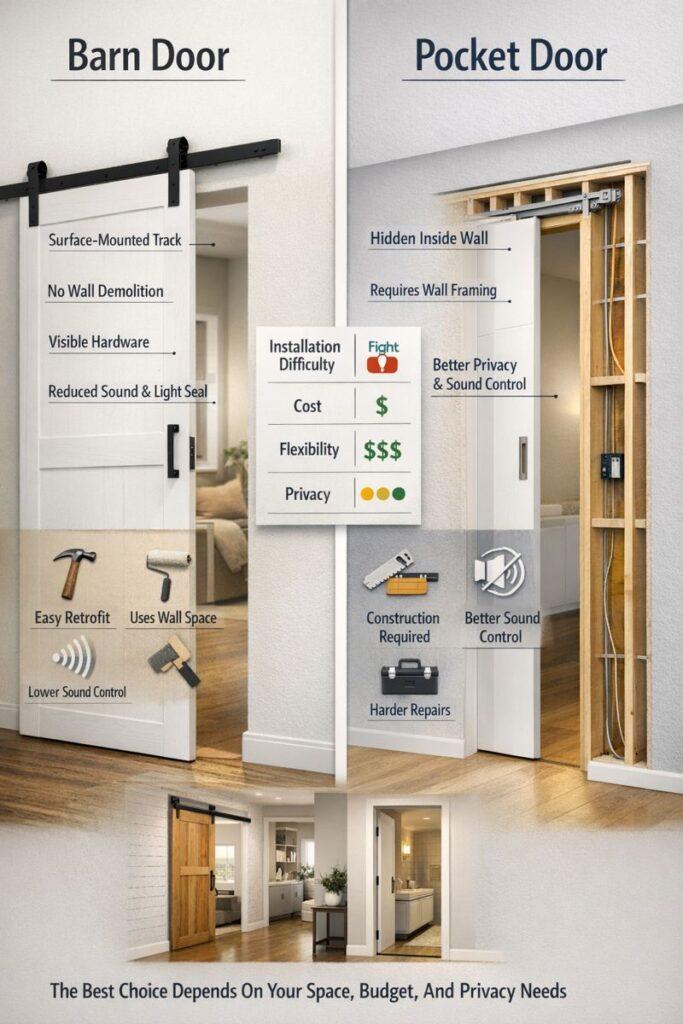
Barn doors mount to the wall surface and slide externally on a track. That single detail makes them one of the easiest door upgrades available.
Because they do not require opening the wall, barn doors work especially well for remodels, retrofits, and older homes. You can install one without tearing into framing or relocating utilities.
Barn doors also offer design flexibility that pocket doors cannot match. You can choose solid wood, glass, metal, mirrored panels, or mixed materials, depending on the space.
They tend to work best in:
Another advantage is visual impact. A barn door becomes part of the room’s design instead of disappearing into it.
If style matters as much as function, browsing modern barn door styles helps clarify how finishes and hardware change the feel of a space.
The Trade-Offs You Need to Accept With Barn Doors
Barn doors are not airtight, and they are not silent. That surprises many buyers after installation. Because the door floats slightly off the wall, you should expect:
- Reduced sound control
- Light leaking around edges
- Small air gaps
For bathrooms or rooms needing strong privacy, this can be a deal breaker.
Hardware quality also matters more than people expect. Inexpensive tracks may rattle, flex, or wear prematurely. Poor anchoring can cause long-term sagging.
You also lose usable wall space. Furniture, artwork, outlets, and switches must stay clear of the sliding path. If wall clearance is tight, reviewing barn door space requirements before buying prevents frustration later.
Where Pocket Doors Truly Shine
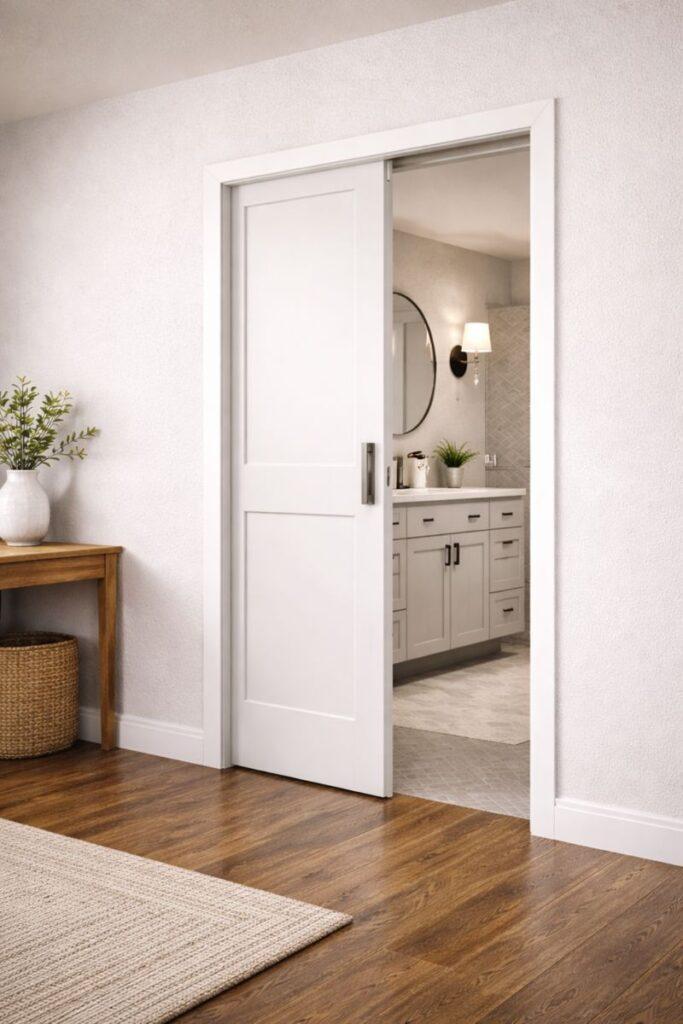
Pocket doors slide inside the wall cavity, disappearing completely when open. That makes them ideal in spaces where every inch matters.
They are especially useful for:
- Small bathrooms
- Narrow hallways
- Tight closets
- Rooms where wall space is limited
When closed, pocket doors behave more like traditional doors. They seal better than barn doors and offer improved sound and privacy control.
They also allow full use of adjacent walls for furniture, shelving, or fixtures.
The Hidden Costs and Risks of Pocket Doors
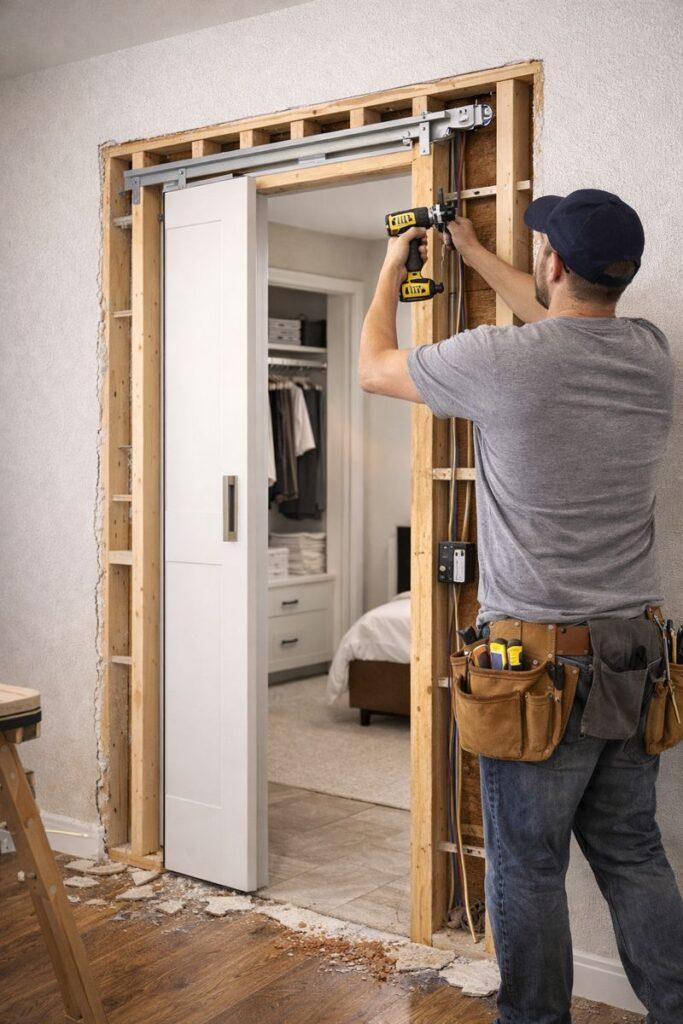
Pocket doors require structural changes. There is no way around that. Installing one typically involves:
- Opening the wall
- Modifying or replacing studs
- Installing a pocket frame
- Relocating wiring or plumbing if present
In older homes, surprises behind the drywall are common. Repairs are also more complicated. If rollers jam or tracks fail, drywall removal may be required.
Pocket doors permanently limit what can go inside that wall. Adding shelves, plumbing, or wiring later becomes difficult or impossible. If budget, access, or flexibility matters, these risks should not be ignored.
Installation Reality: What Homeowners Experience
Barn doors are often realistic weekend projects. With basic tools and proper stud anchoring, many homeowners install them successfully.
Pocket doors are construction projects. They usually require skilled labor, coordination, and additional inspections. Here is how installation typically compares:
Barn Door Installation
- Minimal wall damage
- Faster installation
- Easier upgrades or replacements
- Visible hardware and track
Pocket Door Installation
- Requires wall demolition
- Higher labor and repair costs
- Clean look when open
- Limited access once installed
If flexibility matters, barn doors usually win. If visual minimalism is the priority, pocket doors may be worth the effort.
Realistic Cost Expectations
Costs vary by material, labor, and region, but typical ranges look like this:
Barn Doors
- Door and hardware: $300–$1,200
- Installation: $200–$600
- Total: $500–$1,800
Pocket Doors
- Door and frame: $250–$800
- Installation: $1,000–$3,000
- Total: $1,300–$3,800+
Pocket doors cost more primarily because of labor. Wall work adds time, materials, and risk.
Which Door Works Best by Room Type?
Bedrooms
Barn doors work well when sound control is not critical. Pocket doors offer stronger privacy when needed.
Bathrooms
Pocket doors are usually the better choice. Barn doors can also work for half baths or low-use spaces.
Closets
Barn doors are ideal because they install easily and allow wide, accessible openings.
Home Offices
Pocket doors block sound better. Barn doors offer style with acceptable noise bleed for many users.
Frequently Asked Questions
Are barn doors outdated?
No, they remain popular when used intentionally and sized correctly.
Do barn doors lock?
Yes, surface-mounted and edge-mounted locks are available, though security is limited.
Do pocket doors weaken walls?
Studs are removed, but pocket frames are engineered to compensate.
Which option is better for resale?
Neither hurts resale when installed correctly. Poor installation causes more issues than door choice.
Can a barn door be converted to a pocket door later?
Yes, but it requires opening and rebuilding the wall.
How I Recommend Making the Final Decision
Choose a barn door if:
- Walls are already finished
- Installation simplicity matters
- Design impact is important
- You want flexibility later
Choose a pocket door if:
- Space is extremely limited
- Privacy is a priority
- Walls are already open
- You plan to stay long term
The best choice is the one that fits how you live daily. A door that looks great but frustrates you is never a win.
Conclusion: What Works Best in Most Homes
For most homeowners, barn doors solve more problems with fewer risks. They install easily, adapt well, and can be changed later if needs evolve. Pocket doors work beautifully in specific situations. They just require more commitment upfront.
If you want a low-risk, high-impact upgrade, barn doors are often the safer choice. If space efficiency is critical, pocket doors may be worth the investment.
Reputable Resources for More Information
- Fine Homebuilding – Pocket Door Framing Guides
- Family Handyman – Sliding Door Installation Basics
- This Old House – Door Retrofit Comparisons
- International Code Council – Residential Door Clearances