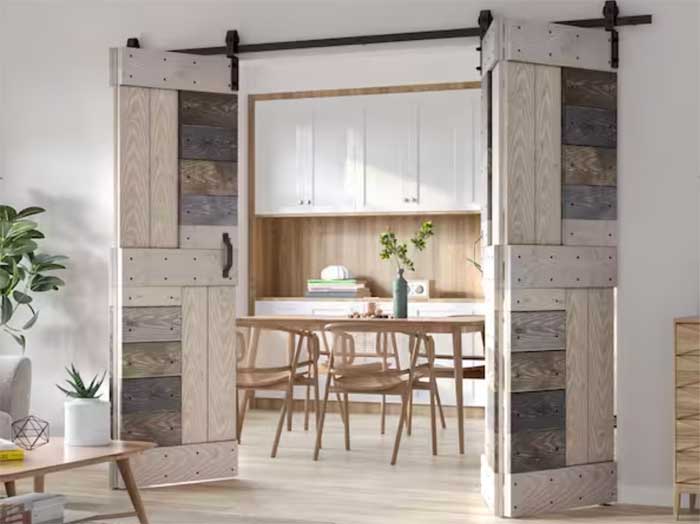
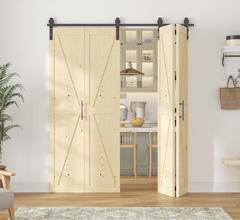
If you love the character of a barn door but don’t have enough wall space for a full slider, barn door bifold doors are often the best compromise. They combine the familiar barn-door aesthetic with hinged panels that fold inward, giving you wide access without needing a long run of open wall.
I’ve seen bifold barn doors work especially well in homes where traditional sliding doors simply aren’t practical. Think closets tucked into corners, pantries near appliances, or older homes with tight floor plans. Retailers like Home Depot and Lowe’s now offer a wide range of styles, from rustic wood to modern glass-and-metal combinations.
Beyond looks, these doors solve a real space problem. Even the National Association of Realtors points to barn-style doors as practical, space-conscious upgrades that can improve everyday usability and buyer appeal.
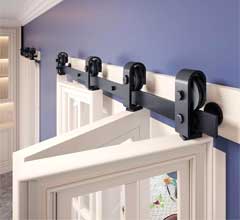
PRO TIP: Most performance issues come from dirty tracks, not bad hardware. Keeping debris out of the track does more for smooth operation than almost any upgrade.
For long-term reliability, lightly lubricate hinges and rollers. A silicone spray like WD-40 Silicone Lubricant works well without attracting dust.
How Barn Door Bifold Systems Are Installed
Installation is more straightforward than many homeowners expect, especially with modern kits. In most cases, you’ll mount a track above the opening or on the wall, then hang the hinged door leaves using rollers and pivots.
The track should extend at least 4 inches wider than the combined door panels. Choosing a quality bifold barn door track kit rated for your door weight is critical.
You can either pair hardware with separate bifold door panels, or simplify the process by buying a kit that includes both doors and track, such as this complete bifold barn door package.
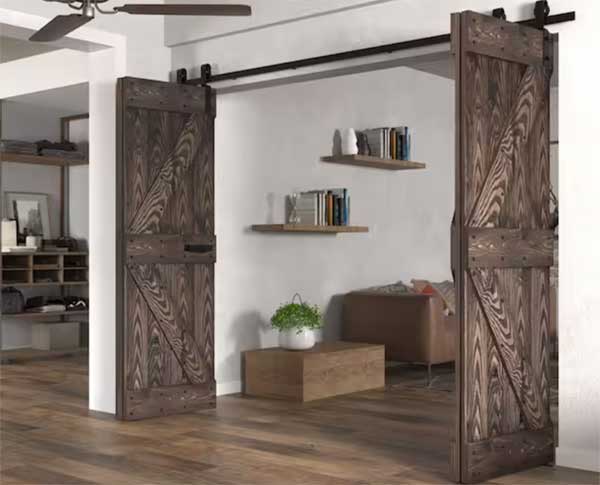
If you’re comfortable with basic tools, plan on a half day for installation. For a deeper walkthrough, see our detailed barn door installation guide.
Advantages—and Trade-Offs—to Consider
The biggest advantage is access. Unlike bypass doors that always block half the opening, bifold barn doors fold clear so you can reach the entire space at once.
The trade-off is complexity. You’ll have more moving parts than a single sliding door, which means proper alignment and maintenance matter. Choosing under-rated hardware or skipping lubrication is the most common mistake I see.
For noise or privacy concerns, understand that bifolds won’t seal as tightly as swing doors. You can improve performance with heavier panels or by following our tips on soundproofing barn doors.
Best Places to Use Bifold Barn Doors
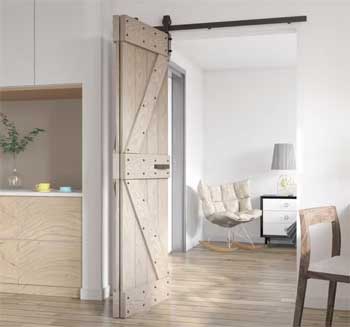
Closets: Ideal when you want full access without sacrificing floor space. Pair them with organized storage for maximum impact.
Kitchens: Excellent for pantries near appliances where a full slider isn’t possible.
Bathrooms: A practical solution when swing clearance is tight. See more bathroom barn door ideas.
Home Offices: A clean way to hide a workspace without committing to permanent walls.
Frequently Asked Questions
Are bifold barn doors harder to install?
They’re slightly more involved than a single slider, but still very DIY-friendly with modern kits.
Do they work for large openings?
Yes. Multiple bifold sets can span wide closets or alcoves when properly supported.
Do bifold barn doors add home value?
They add perceived value through better space usage and updated style, especially in small homes.
How much maintenance do they need?
Minimal. Keep tracks clean and lightly lubricate rollers a few times a year.
The Bottom Line
Barn door bifold doors are a smart middle ground between traditional bifolds and full sliding barn doors. They save space, look intentional, and work in areas where standard barn doors simply won’t fit.
Choose quality hardware, measure carefully, and maintain the track system. Done right, bifold barn doors deliver long-term function with a timeless, flexible look.