Dealing with a tall opening, tight hallway, or a spot where you just don’t have the wall space for a header board? A ceiling-mounted sliding barn door kit can be the cleanest fix. It works a lot like a standard wall track—except the hardware mounts overhead, so the door can ride higher and closer to the ceiling line for better clearance.
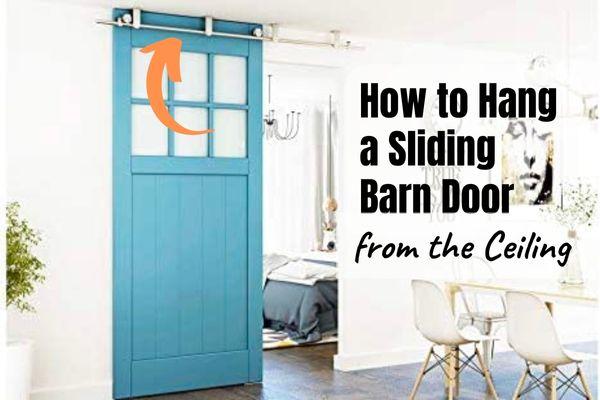
This setup opens up a lot of “otherwise impossible” installs—odd ceiling heights, narrow corridors, or rooms where wall-mounted tracks simply aren’t an option. If you’re trying to keep things sleek, maximize headroom, or get a more built-in look, ceiling-mount hardware is one of those upgrades that solves problems and looks intentional.
Option #1: Low Ceiling Barn Door Hardware
If your biggest challenge is clearance, start here. This track system is designed so the door can sit almost ceiling-flush—perfect when you don’t have room for a header board or you want the cleanest, highest hang possible.
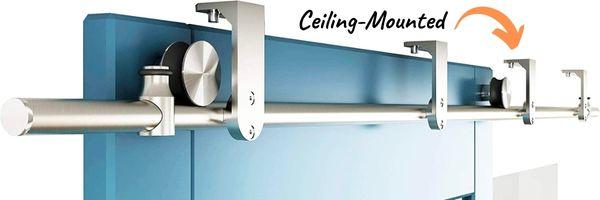
Instead of placing rollers above the slab (the way many wall tracks do), the hangers fasten directly into the door. That small design detail is what lets the panel ride higher—so you get more clearance and a more streamlined look along the top edge.
Note: Track lengths are available from 5 feet up to 16 feet, so you can also configure double doors if your opening is wide.
The brushed stainless finish works with pretty much everything—rustic wood, painted panels, even modern slabs. And because it’s a lighter finish than black, it tends to “disappear” visually and keeps the attention on the door instead of the hardware.
Quick specs: fits 1 3/8″–1 3/4″ thick doors up to 180 lbs each. Need door panels? Order sliding barn door slabs here. These K-style doors arrive unfinished so you can stain, seal, or paint them to match your space.
Option #2: “Box Style” Indoor/Outdoor Ceiling Mount Kit
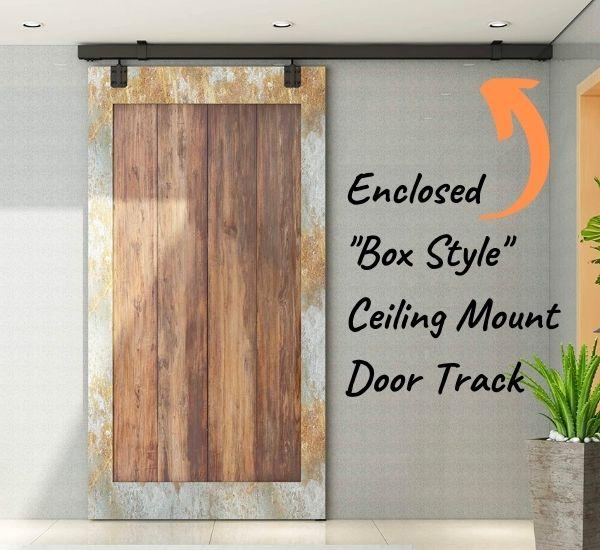
This enclosed-track kit isn’t as “ceiling flush” as Option #1, but it has a big visual advantage: the box housing hides the moving parts. That gives you a minimalist, built-in vibe. Expect under about 4″ between the top of the door and the ceiling.
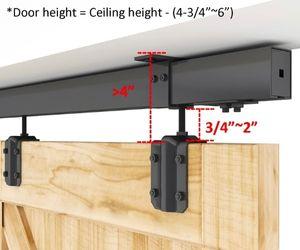
Tracks usually come in 5–8′ spans for common openings. Since the rollers are protected inside the housing, this style can work indoors and in some covered outdoor locations where you want the mechanism shielded.
Capacity: doors 1 1/2″–2″ thick and up to 300 lbs.
Note: There’s also a 5’–8′ ceiling-mount bypass kit for closets, plus a wider 5–16′ bypass hardware kit for bigger spans.
Option #3: How to Hang Sliding Glass Doors from the Ceiling
Yep—ceiling-mount isn’t just for wood doors. There’s a ceiling-hung system for interior sliding glass, designed for 1/2″ tempered glass panels that are drilled to accept the roller hardware.
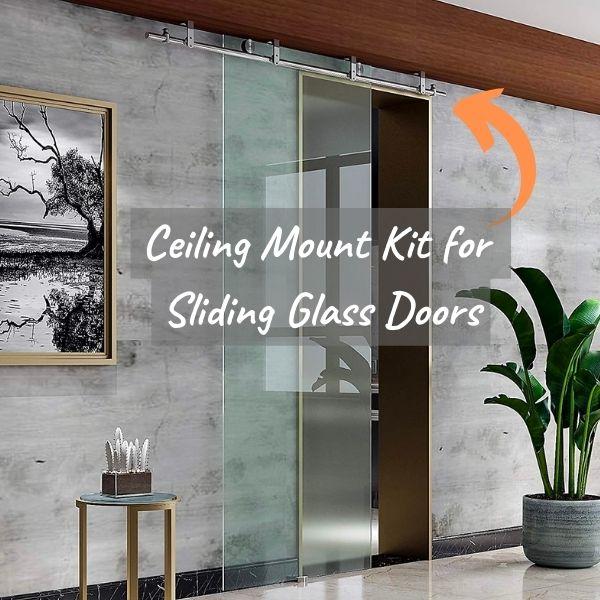
Glass ceiling sliders are popular as room dividers because they keep spaces bright while still creating separation. Frosted glass is especially useful for bathrooms, closets, or offices where you want privacy without turning the area into a dark cave.
Quick Checklist Before You Buy
- Measure twice: opening width/height, plus wall or ceiling run for the door to slide fully open.
- Verify ceiling structure: ceiling-mount systems need solid framing or added blocking to carry the load.
- Confirm door weight: match the slab weight to the hardware rating (don’t push it “close enough”).
- Check door thickness: each kit supports a specific thickness range—especially important for boxed tracks.
- Plan the guide: decide how you’ll keep the bottom from swinging (floor guide or wall guide).
Frequently Asked Questions
Are ceiling-mounted barn doors safe?
Yes—when the ceiling structure is solid and the hardware is installed with rated fasteners. If you’re not sure what’s above the drywall, add blocking or mount to joists.
Which option looks the most “built-in”?
If you want to hide the mechanics, the box-style enclosed track is usually the cleanest-looking choice.
Can I use a taller door to make the opening look bigger?
Often, yes. One advantage of ceiling-mount is you can hang a taller slab higher on typical 8–9′ ceilings, which visually stretches the opening. Just confirm your hardware and layout allow it.
Do I still need a floor guide?
Usually, yes. A guide keeps the door from swinging and protects the track from side loads. Some kits include one; if yours doesn’t, add a compatible guide.
What’s the biggest DIY mistake people make?
Mounting into drywall instead of framing (or skipping blocking). The door might “hold” at first, then loosen over time. Anchor into structure from day one.
Reputable Resources for More Information
- This Old House – practical installation guidance and home improvement basics
- Family Handyman – DIY tips, tool guidance, and installation walkthroughs
- Bob Vila – home project planning and best-practice how-tos
Conclusion
Ceiling-mounted barn door hardware is the go-to move when wall tracks won’t cooperate—low headroom, tall openings, narrow corridors, or a layout that needs every inch. Whether you choose a near-flush stainless system, a boxed track that hides the mechanism, or a glass-ready kit for a bright room divider, the key is the same: measure carefully, anchor into structure, and match hardware to the door’s thickness and weight.
Do that, and you’ll get a smooth-sliding door that looks polished and solves a real layout problem—without forcing a full reframing project.