Barn door bypass doors are one of those solutions that usually appear after someone realizes a standard barn door will not actually work in their space. The style looks great in photos, but real homes come with tight hallways, nearby corners, furniture placement issues, and openings that simply do not leave enough wall space for a single sliding panel.
That is where bypass barn doors become a smart alternative. Instead of sliding fully to one side, two doors move on parallel tracks and overlap each other. This allows you to keep the barn door look while solving space limitations that would otherwise make installation impossible.
I have helped many homeowners plan bypass systems after they ran into those exact constraints. Once installed correctly, they look intentional, polished, and custom rather than like a compromise.
What Are Barn Door Bypass Doors?
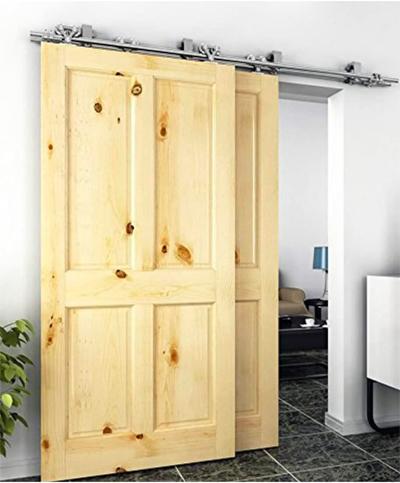
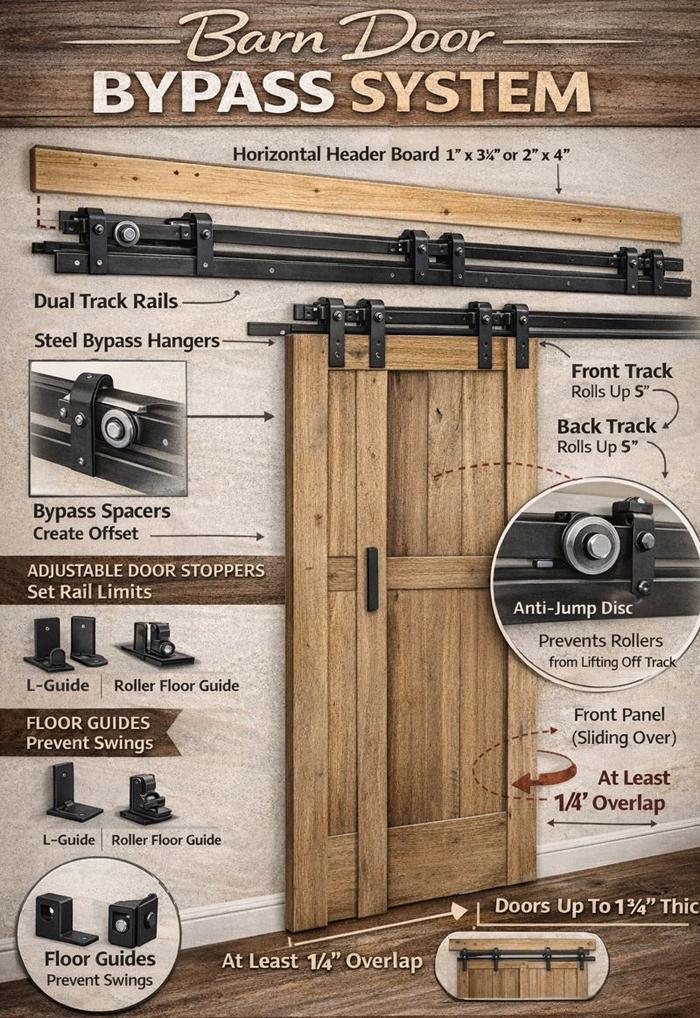
Barn door bypass doors use a dual-track system where one door slides in front of the other. This design allows both panels to move independently while stacking neatly over the opening. Instead of needing wall space equal to the full door width, you only need enough room for the doors to overlap.
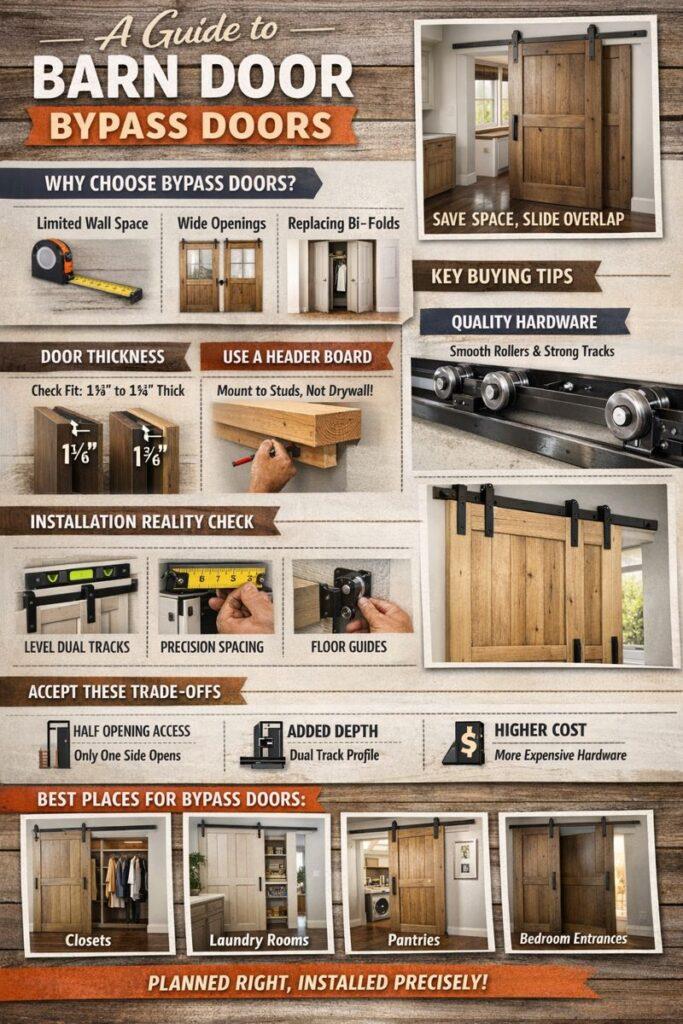
This makes bypass systems especially popular for closets, laundry rooms, pantries, and bedroom entrances where a corner or wall obstruction prevents a traditional sliding door. If you want a visual overview of how these systems are laid out, check out with this diagram:
Why Homeowners Choose Bypass Systems
Most people consider bypass barn doors for one of three reasons. Either they love the barn door aesthetic but lack wall space, they want symmetrical doors over a wide opening, or they are replacing dated bi-fold or sliding closet doors with something more substantial.
Beyond the practical benefits, bypass barn doors tend to look more architectural. They feel like a design choice rather than a workaround, especially when paired with quality hardware and well-proportioned doors. That said, they do require more planning and precision than a single-door setup, which is important to understand early.
Key Buying Decisions That Matter
Hardware Quality Comes First
The most important purchase decision is the track system, not the door design. A bypass system relies entirely on smooth roller movement and precise spacing. Thin tracks or poorly machined rollers often lead to binding, noise, or doors drifting out of alignment over time.
Look for solid steel tracks with high weight ratings and rollers designed specifically for bypass use. Finish is secondary to performance. If you are comparing options, this hardware guide breaks down what to look for.
Door Thickness and Weight Are Not Optional Details
Most bypass systems are designed for doors between 1⅜ inches and 1¾ inches thick. Going thicker can cause clearance problems between panels, while thinner doors may flex or feel unstable when sliding.
If you plan to build or order custom doors, confirm the thickness requirements of your chosen hardware first. Mixing mismatched components is one of the most common causes of installation headaches.
Plan for a Header Board
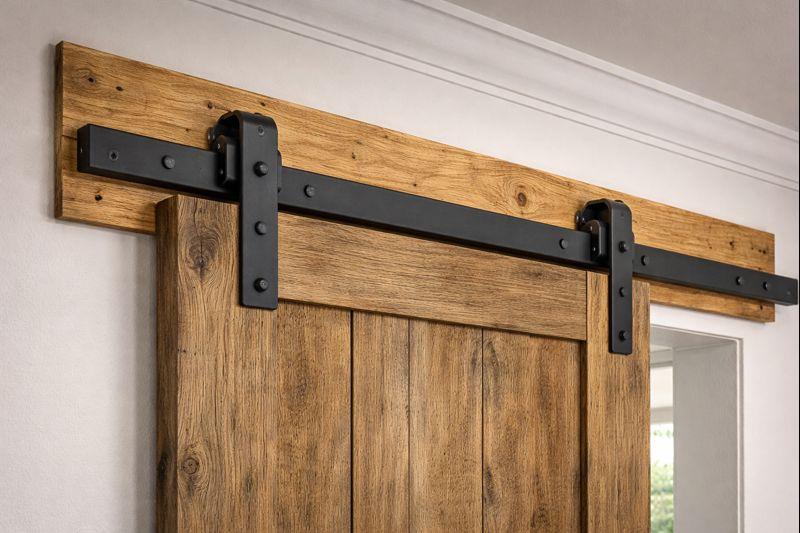
Many people assume they can mount bypass tracks directly to drywall, only to discover that studs do not line up with mounting holes. A properly installed header board solves this issue by distributing weight evenly across the wall framing.
Skipping this step can lead to sagging tracks or pulled anchors later. Proper measuring is essential, and this page provides clear guidance before you start drilling.
What Installation Is Really Like
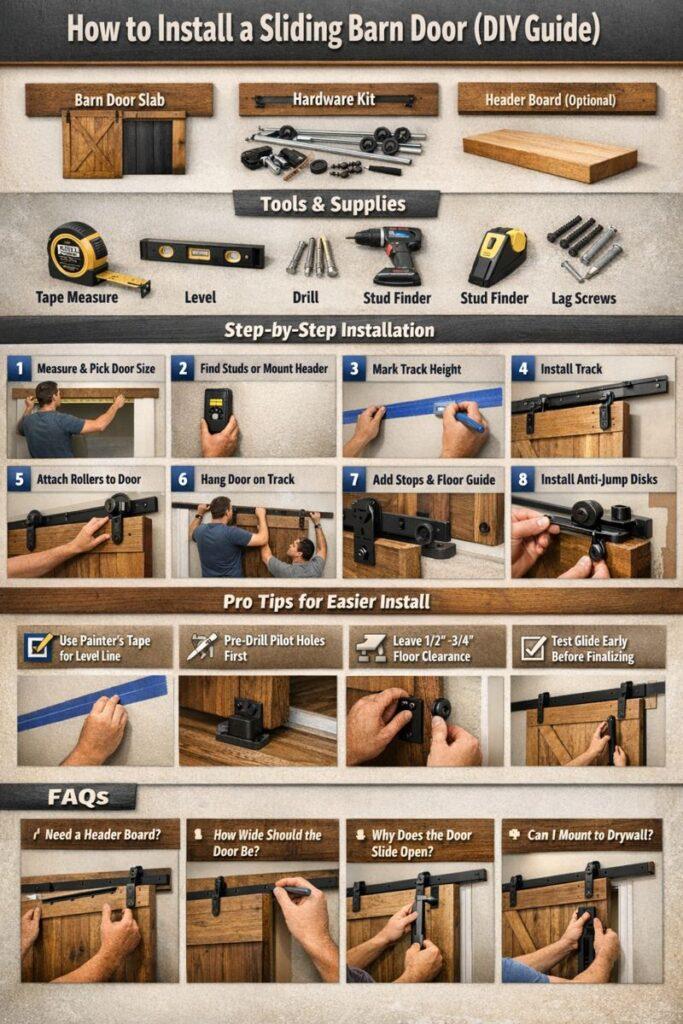
Installing bypass barn doors is not especially difficult, but it does demand accuracy. Unlike a single barn door, which allows some adjustment, a bypass system requires both tracks to be perfectly level and parallel.
Spacing between doors must be exact, rollers must align front to back, and bottom guides need careful placement to prevent rubbing or sway. Small errors tend to compound quickly, which is why patience and careful layout are more important than speed.
If you want to review the full process before committing, this step-by-step installation overview helps set expectations.
For homeowners comfortable with tools and measuring, a DIY install is realistic. If precision work feels stressful, professional installation is often worth the cost.
Trade-Offs You Should Understand Up Front
Bypass barn doors solve space problems, but they introduce a few compromises that are important to accept before purchasing.
Only half of the opening is accessible at a time, which can affect closet access. The dual-track system also adds visual depth, which may feel bulkier in very narrow hallways. Finally, bypass hardware costs more than single-track systems due to the added engineering.
None of these are deal breakers, but they should factor into your decision.
Realistic Expectations After Installation
When installed correctly with quality hardware, bypass barn doors should slide smoothly with minimal effort, stay aligned without rubbing, and operate quietly during daily use.
What they will not do is seal sound like hinged doors or eliminate all light gaps. Barn doors are visual features first and privacy solutions second. Understanding this distinction prevents disappointment later.
Where Bypass Barn Doors Work Best
In real homes, bypass systems perform best in wide closets with limited wall space, laundry rooms near doorways, primary bedroom closets, and pantry openings where swinging doors would be awkward. They shine when design goals and spatial constraints collide.
Frequently Asked Questions
Are bypass barn doors difficult to install?
They require more precision than standard barn doors, but are manageable with careful measuring.
Do bypass doors need floor guides?
Yes, each door typically requires its own guide to prevent movement.
Can bypass doors be mounted on drywall alone?
No. A header board or proper blocking is strongly recommended.
Are bypass barn doors good for bathrooms?
They can work, but privacy and sound control are limited.
Do bypass doors make noise?
Quality rollers remain quiet; noise usually comes from cheap hardware.
Reputable Resources For More Information
- Family Handyman – Barn Door Installation Basics
- This Old House – Sliding Door Hardware Guidance
- Fine Homebuilding – Wall Framing For Heavy Doors
These sources offer practical, construction-focused advice without marketing bias.
Final Thoughts
Barn door bypass doors are an excellent solution when wall space is limited but style still matters. With thoughtful planning, quality hardware, and careful installation, they feel intentional and custom rather than compromised.
The key is treating them as a system, not just a door. When expectations match reality, bypass barn doors become one of the most satisfying upgrades you can make.