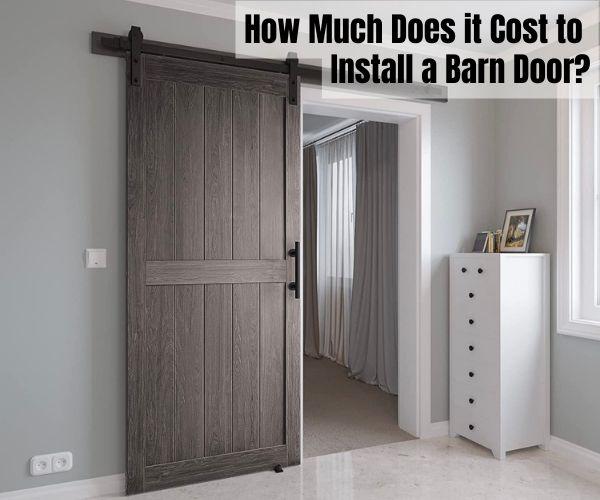
1. What Does It Cost to Install an Interior Barn Door?
Barn doors can be surprisingly budget-friendly—or they can turn into a premium upgrade fast. Your final cost depends on the door material, the size of the slab, the style of hardware, and whether you’re doing the work yourself or paying for installation.
As a general rule, most interior barn door installs land somewhere around $300 to $1,500+. A basic DIY kit is usually on the low end. Custom doors, upgraded hardware, and professional labor push you toward the top.
If you want to keep costs down, the easiest win is to install your barn door yourself. Most kits today are designed for DIYers and include the track, rollers, and mounting hardware—so you’re not piecing parts together one-by-one.
You’ll also find a wide range of door styles now, from modern glass-and-metal to traditional wood panels and trendy patterns.
- Glass and Metal Frame Barn Doors
- Natural Wood Barn Door Slab
- Assemble-Yourself Herringbone Barn Door
- White Glass Sliding Barn Door Kit
A common question is: “Can I convert a standard hollow-core door into a barn door?” You can make a regular door slide, but sizing is the issue most people hit.
For proper coverage and privacy, a barn door should be a few inches taller and wider than the opening. That means a standard interior door often won’t fully cover a standard doorway once it’s mounted on a track.
2. How Long Does Barn Door Installation Take?
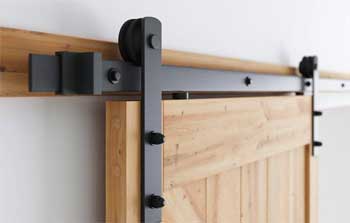
Most DIY installs take about 4 to 8 hours for one person. If you’ve installed hardware before (or you have an extra set of hands), you can often finish faster.
Where things slow down is when you also need to assemble a slab, stain or paint it, or adjust the wall blocking for the track. And if you’re installing double barn doors, plan on more time because everything needs to line up cleanly on both sides.
3. How Do You Stop a Sliding Barn Door From Swaying?
The secret weapon here is a floor guide. Most barn door hardware kits include one. If yours doesn’t, you can buy an adjustable floor guide separately.
It mounts along the path where the door slides and keeps the slab from swinging in and out. This small part makes the whole door feel more solid and “finished.”
4. Can a Barn Door Slide Over a Light Switch?
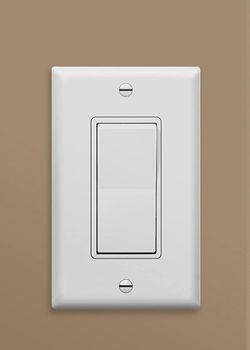
This comes up a lot—because plenty of homes have switches exactly where the door wants to slide. I ran into this myself, and the cleanest fix was relocating the switch. But that isn’t your only option.
Option 1: Add trim around the door opening. The trim gives the door slab a surface to rest against, which creates a little “stand-off” space between the slab and the wall—often enough for the switch to survive.
Option 2: Swap a toggle switch for a flatter paddle switch. Paddle switches sit closer to the wall and are less likely to get bumped by the sliding door.
5. Can You Hang Barn Doors Over Glass Sliding Doors?
Yes—this setup can work, as long as the barn door doesn’t crash into the glass door handles. If the handles don’t stick out past the door frame, you’re usually fine.
If the handles are bulky and can’t be swapped for slimmer ones, add trim around the frame (same idea as the light switch fix). The trim helps the barn door sit slightly away from the wall, giving you the clearance you need.
6. What’s the Best Way to Lock a Bathroom Barn Door?
You’ve got three common options: a teardrop/fan latch, a hook-and-eye latch, or a bolt lock. The right choice depends on how much privacy you need and how your doorway is laid out. You can compare all 3 lock styles here.
The nice part is that all three are affordable and easy to install. And since they can be mounted at different heights, you can place them wherever they feel most natural (or out of reach of kids).
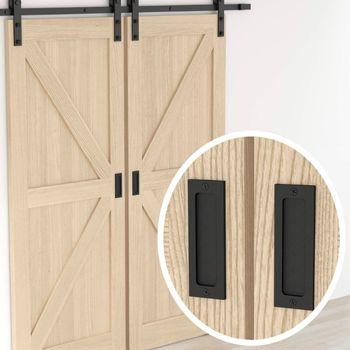
7. How Do You Open a Barn Door From the Inside?
The easiest fix is a flush finger pull. It gives you a comfortable grip without a handle sticking out—perfect for tight halls, small bathrooms, or anywhere you want a clean look.
I’ve used these in narrow spaces where a bulky handle would catch hips, elbows, or bags walking by. They look sharp, feel natural, and keep the door functional from both sides.
Frequently Asked Questions
Do you need special framing to install a barn door?
Not always, but you do need solid blocking behind the drywall (or a header board) so the track has something sturdy to anchor into.
Is a barn door cheaper than a regular door?
It can be—especially with DIY kits. Costs rise quickly if you choose custom doors or pay for professional installation.
Do barn doors provide privacy?
They can, but gaps are common. Using the right size door, adding trim, and installing a proper lock helps a lot.
What’s the most common barn door mistake?
Buying a door that’s too small. You generally want extra width and height to cover the opening and reduce light gaps.
Reputable Resources for More Information
- This Old House – Sliding door and interior door hardware guides
- Family Handyman – DIY door installation and hardware tips
- Fine Homebuilding – best practices for mounting into framing and blocking
Conclusion
Sliding barn doors aren’t just a style trend—they’re a smart space-saver when you install them correctly. If you plan for the right door size, use a floor guide to stop swaying, and handle tricky obstacles like light switches or glass door handles, you’ll end up with a door that looks great and works smoothly every day.